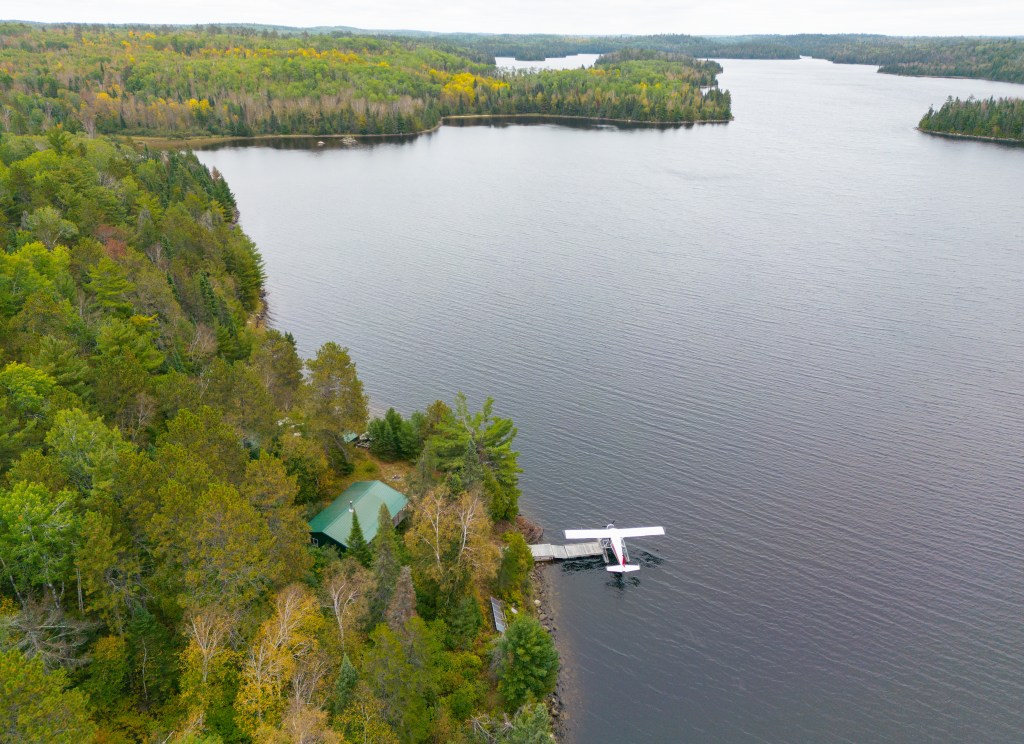

The alarm went off at 5:30 AM in our Nestor Falls hotel room, and my first thought was checking the weather. Not because I’m a weather nerd—because our floatplane departure was scheduled for 10:00 AM, and if the ceiling was too low or the wind too strong, we weren’t going anywhere. This was the moment where all our trip planning either worked or fell apart.
What Does “Arrive Before 9 AM” Actually Mean?
Northwest Flying’s check-in requirement seemed simple on paper: be at the base before 9 AM for departures between 9 and noon. In practice, this meant more than just showing up.
We’d driven from International Falls the day before—about an hour north to Nestor Falls—and stayed overnight nearby. Smart decision. Trying to cross the border, drive 65 miles, and arrive ready to fly by 9 AM would have been stressful.
Northwest Flying Inc. Beech 18 departure from Nestor Falls.
By Jan KoppenNorthwest Flying Inc. C-FNKL Beech 18 warming up at Kakabikitchiwan Lake and departure at Oar Bay.
This video, titled “Northwest Flying Inc. Beech 18 departure from Nestor Falls,” documents the takeoff of a float-equipped Beechcraft Model 18 twin-engine aircraft.
Watch the aircraft’s departure from the water at Nestor Falls, Ontario.
- Preparation and Taxi: The video begins with the Beech 18 already on the water, turning and maneuvering away from the dock area to line up for its takeoff run. The distinctive sound of the aircraft’s radial engines is prominent throughout this initial phase.
- Takeoff Run: The pilot applies full power, and the aircraft rapidly accelerates across the water’s surface. The floatplane transitions from displacing the water to being supported by the lift from the wings, rising up “onto the step” before liftoff.
- Liftoff and Initial Climb: The plane successfully lifts off the water. The camera captures the aircraft as it climbs away, providing a view of the vast, forested landscape and lake system of the surrounding area.
- Departure: The aircraft is tracked as it continues its climb and flies into the distance until it becomes a small speck against the sky, with the sound of its engines gradually fading until the end of the video.
The video is 3 minutes and 40 seconds long and was published on July 5, 2013, by the channel Jan Koppen.
What happened at check-in:
We pulled into Northwest Flying’s base at 8:45 AM. The parking lot already had several vehicles—other groups getting ready for their departures. A staff member directed us to free secure parking spots where our truck would sit for the week.
Inside the office, the process moved quickly:
- Confirmed our cabin reservation (Cleftrock Lake, 35 air miles out)
- Weighed our gear and groceries (important for aircraft weight calculations)
- Reviewed the cabin inventory (what’s there, what we brought)
- Got brief instructions on propane, water systems, and boat motors
- Stored items we didn’t need in their cooler/freezer storage (they keep your vehicle keys too)
- Signed liability waivers
- Received satellite messenger instructions for emergencies
The whole process took maybe 20 minutes. Then we waited.

Why We Were Watching the Sky More Than the Clock
At 9:15 AM, we heard it—the unmistakable sound of radial engines starting up. Not our Beech 18 yet, but another one departing with an earlier group. The sound echoed across the water, and I watched the floatplane taxi out, accelerate, and lift off smoothly.
That’s when I realized: they wouldn’t be sending planes up if conditions weren’t good.
The weather delay question everyone asks:
“What happens if weather delays the fly-in or fly-out?”
The honest answer is: the pilots decide, and you wait. Northwest Flying starts operations at 6:00 AM, giving them flexibility within the morning window. If fog or low clouds delay early departures, they can push flights back within that 9 AM-noon window.
What actually causes delays:
- Low ceiling (clouds too low for safe flying)
- High winds (makes water landing dangerous)
- Thunderstorms (obvious reasons)
- Visibility issues (rain, fog, smoke from forest fires)
What doesn’t cause delays:
- Light rain (floatplanes don’t care)
- Cold temperatures (engines start fine)
- Your personal schedule (safety comes first)
The pilots at Northwest Flying have decades of experience. They’re not going to risk a flight just to stay on schedule. But they’re also not overly cautious—if conditions are flyable, they fly.
The Sound of C-FKNL Warming Up
At 9:45 AM, a staff member told us: “You’re next. Load up.”
We carried our gear to the dock where C-FKNL—the Beech 18 I’d read about, researched, and hoped to fly in—sat tied to the dock. Up close, the airplane looked massive. The twin Pratt & Whitney R-985 radial engines dominated the wings. The floats were bigger than canoes.
Loading a Beech 18 floatplane:
This isn’t like boarding an airline. There’s no jetway or stairs. You step from the dock onto the float, then climb through a side door into the fuselage. Our pilot (who introduced himself as having flown this route for 15 years) directed where to place gear for proper weight distribution.
Heavy items went forward. Lighter items aft. Nothing loose—everything secured. The pilot checked every item placement and adjusted a few things. In a floatplane, weight distribution directly affects how the aircraft handles on water and in flight.
Once loaded and everyone seated with seatbelts fastened, the pilot went through his preflight checks. I could hear him moving around outside, checking surfaces, testing control movements, inspecting the floats.
Then he climbed into the pilot seat, and I heard the starter engage.
The Sound That Announces Departure
The right engine (from our perspective) fired first. A cough, a puff of smoke from the exhaust, then a rumbling idle. Thirty seconds later, the left engine started. Now both nine-cylinder radial engines were running, and the entire airplane vibrated with that distinctive rhythm.
Why the sound matters:
Radial engines don’t sound like car engines or jet engines. They have a deep, rhythmic rumble because the cylinders fire in a specific sequence around the crankshaft. When both engines run at slightly different RPMs during warmup, they create a “beating” sound—the rhythms overlap and separate.
This sound tells experienced pilots (and mechanics) a lot about engine health. Smooth, even rhythm? Good. Rough, uneven, or misfiring? Problem.
Our pilot let the engines warm up for several minutes. The oil temperature gauges needed to reach operating range before he’d add power. In cold engines, oil is thick and doesn’t lubricate well. Rushing this step risks engine damage.
While we waited, I watched the instruments. Oil pressure: rising. Oil temperature: slowly climbing. Cylinder head temperature: coming up. Everything looked normal, even though I barely knew what I was looking at.
From Dock to Open Water: The Taxi Phase
At 10:05 AM—five minutes behind schedule, well within normal—our pilot released the dock lines. Ground crew pushed us away from the dock, and we were floating free.
The pilot added a little power to both engines. C-FKNL started moving slowly through the water, away from the dock area and toward open lake.
Why floatplanes taxi differently than boats:
A dual engine floatplane doesn’t turn like a boat does. To steer while taxiing, pilots use three things:
- Differential power (more power on one engine turns you toward the other side)
- Water rudders (small rudders on the back of the floats, controlled by the pilot’s feet)
- Momentum and planning (you can’t stop quickly, there is no reverse)
Watching from inside, the taxi looked effortless. The pilot made small power adjustments, and the airplane turned exactly where he wanted. But I knew from reading about floatplane operations: this takes practice. Wind pushes the tail around. Current affects your track. Other boats or aircraft create wakes that throw you off course.
Our pilot was positioning us for takeoff into the wind. Floatplanes almost always take off into the wind because it reduces the water speed needed to get airborne.
The Takeoff Run: When Physics Becomes Obvious
Once positioned, our pilot paused and checked around for boat traffic. Clear. He looked at his instruments one more time. Everything normal. Then he pushed both throttles forward.
What happened next, in sequence:
0-10 seconds: The Plow Phase
Both engines roared to full power—900 total horsepower. The sound inside the cabin went from rumble to roar. But we weren’t moving fast yet. The floats were plowing through the water, creating huge spray on both sides. Acceleration was slow because we were pushing tons of water out of the way.
10-25 seconds: Getting “On Step”
As speed built, the floats started rising up onto the surface instead of plowing through it. This is called getting “on step”—like a water skier rising up to plane across the water. Suddenly, our acceleration increased dramatically. The spray changed from heavy walls of water to lighter mist. The airplane felt lighter, skipping across the surface now instead of pushing through it.
25-35 seconds: The Unstick Point
At about 60-65 mph (I’m guessing from experience—there’s no speedometer in the passenger cabin), the wings generated enough lift to overcome the 9,000-pound weight of the loaded airplane. We didn’t “leap” into the air. We gently rose off the water—so smoothly I almost didn’t notice the exact moment the floats stopped touching.
Then we were flying. The nose pitched up slightly. The engine sound changed as the pilot reduced power to climb settings. The lake surface dropped away below us, and suddenly I could see the entire base, the town of Nestor Falls, and the network of lakes stretching north.

What surprised me:
How smooth the whole sequence was. YouTube videos make takeoffs look more violent—engines screaming, airplane shaking, dramatic moment of liftoff. In reality, our takeoff in C-FKNL felt progressive and controlled. Each phase flowed into the next.
The pilot wasn’t wrestling the airplane. He was managing it—adjusting power, making small control inputs, letting the airplane do what it was designed to do.
Beech 18 floatplane history buff talks about the safety →

The Climb Out: Why Remote Looks Different From Above
We climbed at maybe 500 feet per minute—not fast by modern standards, but steady. The pilot kept us relatively low, maybe 1,500-2,000 feet above the ground.
What you see from a low-altitude floatplane:
The landscape below was entirely forest and water. Not “mostly forest with some roads and towns.” I mean entirely wilderness. From 2,000 feet, I could see dozens of lakes, hundreds of small ponds, and continuous boreal forest in every direction.
No roads. No power lines. No buildings except the occasional remote cabin. This wasn’t “rural”—this was genuine remote wilderness.
Our pilot pointed out landmarks:
- The lake where another group was fishing
- A known moose feeding area in a shallow bay
- The route we’d follow if weather forced us to divert
- Cleftrock Lake in the distance, our destination
The flight would only take 15-20 minutes—Cleftrock is 35 air miles from base—but I was already thinking about the return flight in a week. This exact view, this exact airplane, this exact experience would be our connection back to civilization.
What “First-Class Remote Cabin” Actually Means
At 10:23 AM, our pilot reduced power and started descending toward Cleftrock Lake. The approach was smooth—a gradual descent, then a low pass over the lake to check for floating logs or debris, then a turn to line up for landing.
The landing itself felt gentle. The floats kissed the water, creating spray, and we transitioned from flying to floating in about three seconds. Then we were taxiing toward our cabin dock.
First impressions of Cleftrock outpost:
The cabin sat back from the shoreline, connected by a short path to the dock. Solar panels on the roof. A proper dock with three boats tied up. A separate outbuilding (turned out to be the fish-cleaning shed and extra gear storage).
We unloaded our gear onto the dock while the pilot reviewed cabin systems:
- Propane tank location and shutoff
- Solar power system and backup generator
- Water pump operation
- Boat motors (three Yamaha outboards, all newer)
- Emergency satellite messenger procedures
- When he’d return to pick us up (same time, seven days from now)
Then he was gone. C-FKNL taxied back out, accelerated across the lake, lifted off, and climbed away. The sound of those radial engines faded gradually until we heard only wind and water.
We had the lake entirely to ourselves.
Inside the Cabin: Where Reviews Said “Clean and Comfortable”
I’d read reviews calling Northwest Flying’s cabins “clean and comfortable” and “matching photos and expectations.” Those reviews were accurate but undersold how well-equipped these outposts are.
What we found inside:
- Hot and cold running water (pump system fed from the lake, filtration included)
- Indoor shower (actual hot water, not lukewarm)
- Full kitchen with propane stove and fridge
- Solar lights throughout (bright LED, not dim)
- Backup generator (we never needed it—solar worked perfectly)
- Comfortable beds with real mattresses (not camp cots)
- Screened windows (critical for keeping bugs out)
- Wood stove for heat (nights got a bit fresh, even in July)
What made it “first-class remote”:
This wasn’t roughing it. We had amenities that would be normal in a regular cabin. But we were 35 air miles from the nearest road, with zero cell service, zero other people, and complete isolation.
The combination—wilderness location with comfortable infrastructure—is what makes these outposts different from tent camping or drive-to cabins.
➤ What to expect at our fly-in fishing outposts →
The Week: What Reviews About “Tons of Musky and Smallmouth” Meant
The fishing lived up to everything Northwest Flying promises. Without exaggerating or making this into a fishing report, here’s what we experienced:
Species we targeted and caught:
- Northern Pike (dozens, including several over 40 inches)
- Walleye (daily, kept some for shore lunches)
- Smallmouth Bass (constant action in rocky areas)
- Lake Trout (deep water, required different techniques we didn’t do much)
- We saw Musky but didn’t land any (they’re hard)
What “never run out of new spots” actually means:
Cleftrock Lake connects to several other lakes through channels and narrows. With three boats available, we could split up and explore different areas. Even fishing 8-10 hours daily for seven days, we only covered maybe 40% of available water – which I still can’t believe.
Every day brought new bays, new structure, new patterns to figure out. The lake was aggressive because the pressure is so light—only a few groups per year access this water.
Why the boat motors matter:
The three Yamaha outboards (I think they were 25 or 30 horsepower each) ran perfectly all week. They started on the first or second pull every morning. They didn’t foul or quit randomly. We didn’t worry about getting stranded.
This sounds basic, but it’s critical. If you’re 35 air miles from help and your boat motor dies, you’re paddling or waiting for rescue. Reliable equipment isn’t a luxury—it’s essential safety and we didn’t have to think about it.
The Return Flight: What Pickup Day Looks Like
On Day 7, we woke up knowing our pickup was scheduled for 2:00 PM. Our instructions were simple: have all gear ready at the dock, cabin cleaned and closed up, boats secured.
What we did:
- Packed all gear by noon
- Cleaned the cabin (sweep, wipe surfaces, organize)
- Closed all windows, turned off systems
- Secured boats to dock
- Sat on the dock and waited
At 1:50 PM, we heard it—faint at first, then growing louder. The unmistakable sound of twin radial engines. C-FKNL appeared over the treeline, descended, and landed smoothly on Cleftrock Lake.
Our pilot taxied to the dock, and we reversed the loading process from a week earlier. Gear loaded, everyone aboard, systems checked, and we were taxiing back out.
The takeoff home felt different:
Same airplane. Same pilot. Same process. But this time I knew what was coming. I knew how the acceleration would feel, when we’d get on step, approximately when we’d lift off.
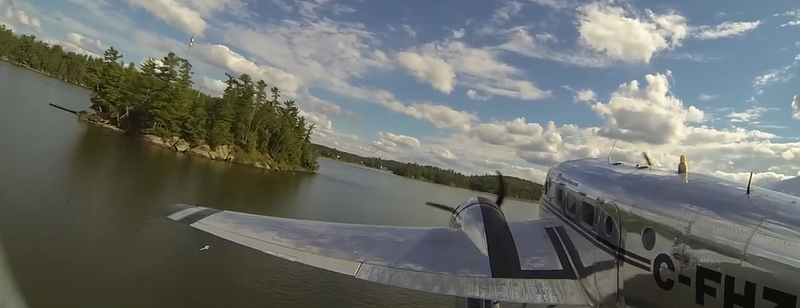
And I appreciated it more.
The skill required to safely operate the airplane, the maintenance that keeps it airworthy, the experience that makes it look easy—all of it registered differently after a week of thinking about nothing but fishing and wilderness.
What the Reviews Don’t Capture: The Complete Experience
Looking back at the Google Reviews praising Northwest Flying’s “dependable service” and “best staff anywhere”—they’re accurate, but incomplete.
Here’s what you don’t get from reading reviews:
The sound of those radial engines becomes the bookends of your week. It’s the last thing you hear leaving civilization and the first thing you hear returning. That sound means the trip is actually happening.
The pilot skill matters more than you realize until you watch them dock a 9,000-pound floatplane in crosswinds or land on a remote lake with just visual reference—no instruments telling them altitude or airspeed over water.
The cabin quality exceeds what “remote outpost” usually implies. You’re not sacrificing comfort for isolation—you’re getting both.
The fishing abundance matches the marketing because the fly-in access keeps pressure low. We didn’t see another boat all week. Not one. The fish haven’t learned to avoid lures.
The complete isolation resets something mentally. By Day 3, I’d stopped thinking about work, email, or anything from regular life. By Day 7, I wasn’t ready to leave.
Would I Do It Again? Every Year If Possible
The door-to-door travel day was long but manageable. Drive to Nestor Falls, sleep nearby, arrive at base by 9 AM, fly out by 10 AM. Reverse process on return day. Total travel: maybe 7-9 hours each way, with most of that driving.
Was the Beech 18 experience worth it specifically?
Yes, but not just for novelty. The Beech 18 carries more gear and people than smaller floatplanes. It’s comfortable for the 20-minute flight. It’s historically significant. And I gotta tell ya, the sound of those radial engines – every time I think of it – it sets the tone for my entire day.
Could they fly us in a Beaver or Otter instead? Sure. Would it work fine? Absolutely. But there’s something about starting and ending your remote fishing trip in such an iconic twin-engine floatplane that makes the whole experience feel more significant.
The cost breakdown:
Fly-in outpost trips are special. Our week at Cleftrock cost more than a drive-to cabin, but less than a luxury resort.
What you’re paying for:
- Your own private lake or two, or five (fly-in only access)
- Pristine fishing (light pressure)
- Complete facilities (comfortable cabin)
- Reliable equipment (boats, motors, safety gear)
- Experienced pilots (safe flights in vintage aircraft)
- Week of memories you’ll actually remember
We’re already planning next year’s trip. Different lake (maybe Gordon or Kishkutena), same operator, hopefully same airplane.
Check Cabin Availability and Book your Northwest Flying trip →
Final Thought: Why the Airplane Matters to the Experience
I could have chosen a drive to fishing location. But I wouldn’t have, because that’s giving up the rare time of total privacy on the entire lake.
The floatplane is what makes remote accessible.
Twenty minutes in C-FKNL covered distance that would take a full day by boat. That compression of time and effort is what allows regular people—not just hardcore wilderness experts—to experience genuine remote fishing.
And when that access happens via a historic aircraft like the Beech 18, maintained by experienced pilots, operated by a family business that’s been doing this for 50+ years—the journey becomes part of the destination.
The takeoff and landing weren’t just transportation. They were experiences worth having on their own. The fact that they bookended a week of excellent fishing in complete isolation just made it better.
I can’t wait to be back at Northwest Flying’s dock at 9:00 AM, listening for the sound of radial engines starting up, ready to do it all again.
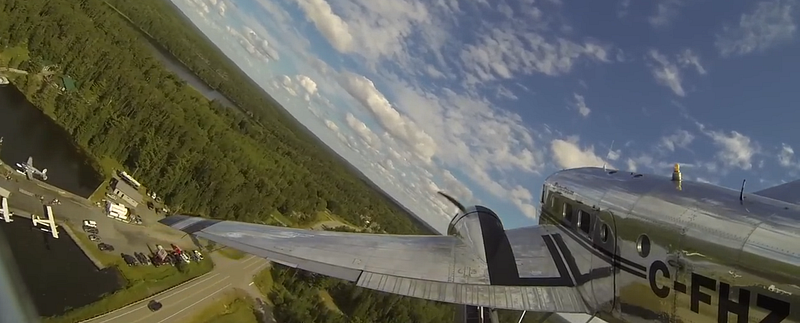
Ready to experience Beech 18 floatplane travel to remote Ontario fishing? Northwest Flying Inc. operates from Nestor Falls with departures daily during fishing season. Book early—prime weeks fill up a year in advance.