
Three Generations, One Floatplane: How Remote Fishing Traditions Connect Families Across Time
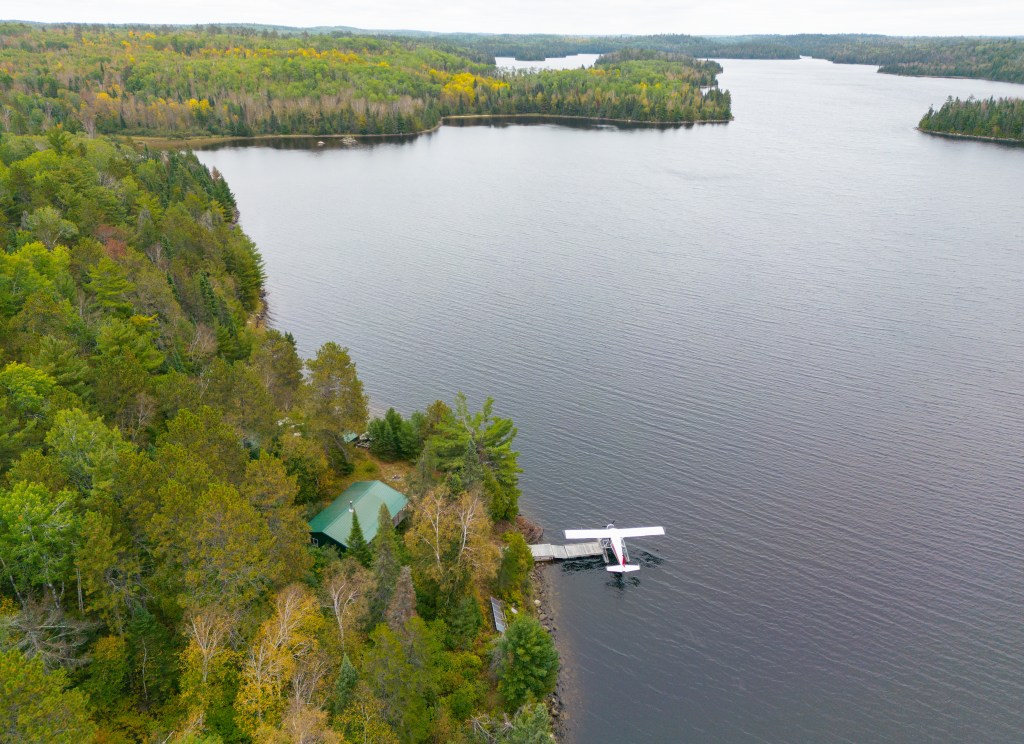
My grandfather’s hands shook slightly as he gripped the seat during our floatplane landing in 1987. Thirty-seven years later, I watched my own son’s hands do the same thing as we descended toward the same outpost—now rebuilt, modernized, but occupying the exact coordinates where three generations of our family learned what fishing actually means.
The trembling wasn’t fear. It was the recognition that something significant was about to begin.
What Makes This Fishing Trip Different?
A multi-generational fishing trip creates what historians call “embodied memory”—experiences that transmit values and stories through shared action rather than verbal instruction.
It’s not like typical vacations where family members often splinter into age-based activities, remote fishing forces collective problem-solving, shared meals prepared from the day’s catch, and evenings without screens where the only entertainment is each other’s company.
We were living out a part of history – almost exactly as they did so many decades ago in this old Nestor Falls Video from a fly in fishing trip by the very same company.
Clint Hafenrichter
1968 Nestor Falls – Northwest Flying Inc
The video is old 8mm or 16mm archival footage that provides a fascinating historical glimpse into the early days of floatplane operations and fly-in fishing in Northwestern Ontario.
Part 1: Nestor Falls Base Operations (00:00 – 01:20)
This segment focuses on the Northwest Flying base and the preparations for flights, emphasizing the vintage equipment and rustic setting:
- Title Card [00:00]: The video opens with a title card displaying the year and location: 1968 Nestor Falls – Northwest Flying Inc.
- The Fleet and Docks [00:04]: The primary visuals are of the water base, showing several classic floatplanes tied up at wooden docks.
- The most prominent aircraft is a large, likely yellow or orange De Havilland Beaver (DHC-2), a famous workhorse of the Canadian bush.
- Preparation and Maintenance [00:30]: A pilot or mechanic is shown performing maintenance on one of the aircraft engines. The shots capture the details of the large radial engine, propeller, and pontoons (floats).
- Loading Gear [01:00]: Several men are seen interacting and moving bulky bags and gear near the docks, presumably loading supplies for the remote outposts. The clothing and general setting reflect the late 1960s era.
Part 2: Flight and Wilderness Journey (01:20 – 02:59)
This section transitions to the journey into the remote Canadian wilderness:
- Takeoff and Flight [01:20:00]: The camera is placed inside or mounted on the floatplane as it accelerates across the water’s surface for takeoff.
- Aerial Views [01:30:00]: Footage shows expansive views of the vast landscape from the air. The scene is dominated by the Canadian Shield—endless boreal forest dotted with hundreds of interconnected lakes, reinforcing the feeling of complete isolation.
- Arrival at the Outpost [02:00:00]: The plane lands on a pristine, remote lake. The scene shows the aircraft taxiing toward a simple, rustic outpost location. People are visible on the shore, greeting the arriving plane.
- Unloading [02:30:00]: Gear is quickly offloaded from the plane onto the dock, marking the beginning of the trip for the passengers. The outpost appears to be a basic, wooden cabin structure near the shore.
Part 3: Fishing and Camp Life (03:00 – 05:05)
The video shifts focus to the recreational activities that define a fly-in trip:
Relaxation [05:00:00]: The final moments of this segment show the men relaxing near the fire and eating the freshly cooked meal, enjoying the remote setting.
Fishing Action [03:00:00]: Men are shown fishing from small, aluminum boats.
One scene features an angler holding up a large fish, which appears to be a Northern Pike or possibly a large Muskie, confirming the purpose of the trip.
Other shots show the action of casting, reeling, and enjoying the process on the untouched lake.
Shore Lunch Preparation [04:00:00]: The group is gathered on the shore for the traditional Canadian shore lunch.
Men are cleaning and filleting fish next to the water, and preparing an open fire for cooking.
The footage captures the social atmosphere and camaraderie of the remote camp experience.
The magic lies in the change of normal family dynamics.
On remote water, Grandpa’s years of reading weather patterns suddenly matters more than Dad’s career accomplishments or the teenager’s social media following.
Things reset completely.
How Do You Actually Balance Comfort for Grandpa With Adventure for Everyone Else?
This tension nearly derailed our trip during planning. My father, now 68, doesn’t want to sleep on the ground anymore. My son, at 16, would have been disappointed with anything resembling a hotel.
The solution revealed itself in what fly-in outfitters now call “first-class remote cabins”—a category that didn’t exist when my grandfather first brought me north in the 1980s.
What we discovered at our outpost cabin 25 air miles from the base:
| Family Need | Old-School Solution (1980s) | Modern Outpost Reality |
|---|---|---|
| Grandpa’s mobility | Rough it or stay home | Running hot/cold water, indoor shower, no stairs |
| Dad’s nostalgia for “real” wilderness | Compromise on authenticity | Fly-in access = guaranteed seclusion, totally remote |
| Teen’s need for adventure | Separate camping trip | Multiple boats, unexplored bays, new spots daily |
The cabin slept eight comfortably—critical when Grandpa needs afternoon naps and the teenager wants to stay up late by the wood stove.
Solar lights with backup generators meant reliable power without the constant hum of machinery that ruins wilderness ambiance.
Most importantly, the 25-air-mile distance created genuine isolation (fly-in only, zero road access) while keeping the flight duration short enough that Grandpa’s anxiety stayed manageable.
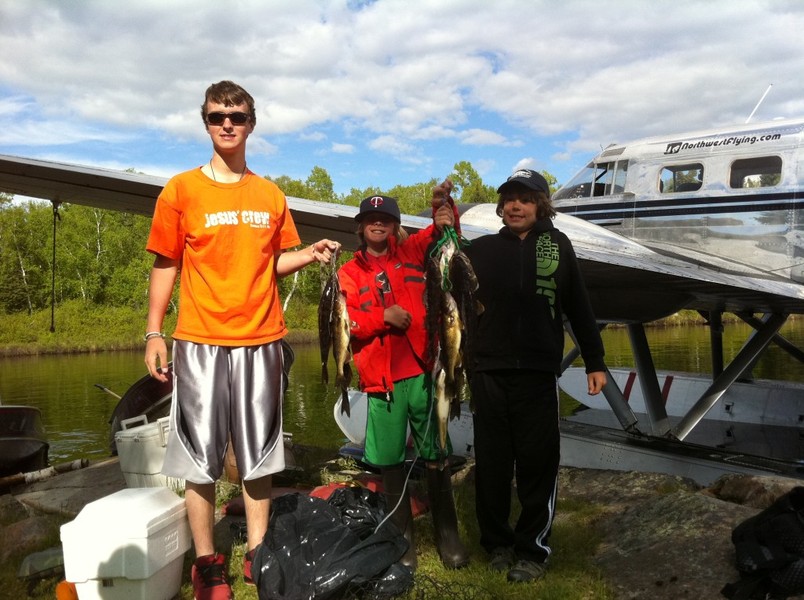
The key insight: Modern outpost comforts doesn’t diminish the wilderness experience—it makes multi-generational trips physically possible. My grandfather might not have been willing to make this trip in 1987 conditions at his current age.
But he made it this year, and it mattered. For all of us.
Should Three Generations Fish From One Boat or Split Up?
We tested both configurations over our week, and the results surprised me. Here’s what actually happened versus what I assumed:
Day 1-2: All together in one 16-foot boat
- My assumption: Togetherness would create bonding
- Reality: Three people (two adults + one youth), plus gear, tackle, life jackets, and personal items created constant spatial negotiation
- Actual conversation: “Can you hand me that rod?” “Which one?” “The one under your dad’s tackle box.” “I don’t see a tackle box.” (Repeat endlessly)
Day 3-7: Two people per boat, rotating partners
- What happened: Real conversations emerged
- Grandpa + Son (Day 3): Two hours of stories about Grandpa’s first fly-in trip in 1961, told while drifting a weed bed
- Dad + Son (Day 4): Troubleshooting a fouled propeller together, followed by finding a new bay neither had fished
- Grandpa + Dad (Day 5): Processing their relationship as adults, not parent-child, while jigging for Lake Trout

The two-boat approach created rotating partnerships that would be impossible in daily life.
When do a 68-year-old and teen grandson get four uninterrupted hours together, without phones, working toward a shared goal?
It simply doesn’t happen at home.
Practical consideration: The outpost provided multiple newer Yamaha motors and ample boat gas on-site. We never worried about reliability or range, which kept Grandpa calm and gave the teenager freedom to explore distant structure.
How Do You Teach Conservation When Everyone’s Excited About Catching Trophy Fish?
This question haunted me before the trip.
My son had grown up seeing Instagram photos of grip-and-grin trophy Pike—five fish laid out on a dock, mouths gaping. How could I teach him “responsible angling” without sounding preachy or contradicting his own online fishing heroes?
The lake itself provided the lesson structure. Here’s what I learned about teaching conservation through tradition rather than lecture:
The Shore Lunch Tradition
What it is: The practice of keeping 2-3 Walleye during a fishing day, cleaning them on a remote shoreline, and cooking them fresh over an open fire for lunch.
What it actually teaches:
- Limits have purpose: You keep exactly what you’ll eat in that meal, nothing more
- Immediate consequence: The fish you kept 90 minutes ago is now food sustaining your continued fishing
- Zero waste: Bones and scraps go back in the lake, feeding future generations of fish
- Connection between harvest and consumption: City kids rarely experience this link
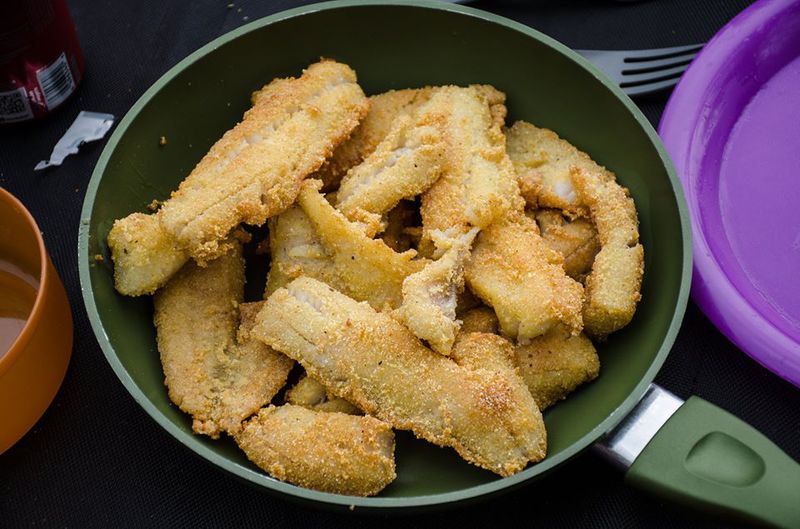
My son kept four Walleye on Day 2—legal, but more than we needed. By Day 4, when we did our second shore lunch, he kept exactly two without me saying a word. The tradition taught the lesson.
Get our traditional shore lunch techniques and recipes →
Regulations as Framework, Not Restrictions
The outpost operator’s reminder: “It is your responsibility to observe all fishing and boating regulations.”
I initially heard this as legal liability language. My father heard it differently—as an invitation to explain why regulations exist.
What Grandpa explained to my son while releasing an undersized Northern Pike:
“In 1975, you could keep any Pike you caught in Ontario. By 1985, these lakes were fished out—nothing over 24 inches left. The regulations you’re following now? They’re why we’re catching 40-inch fish this week. Limits aren’t about the government controlling you. They’re about your grandkids having this same experience.”
That 90-second conversation, delivered while handling a living fish that we returned to the water, accomplished more than any lecture about sustainability possibly could.
Pack It Out: The Most Tangible Conservation Lesson
The rule: All garbage must be brought out with you when you leave the outpost.
Why it matters as a teaching tool:
- Teenage carelessness becomes visible immediately
- Collective responsibility creates peer accountability
- By Day 3, my son was reminding us to pack out apple cores
- Physical proof of your impact (or lack thereof) on a place
On our departure day, we loaded our garbage into dry bags for the floatplane ride out. My son said, “That’s it? That’s everything we left behind in a week?” The small pile of waste, compressed into two bags, made our impact visible and minimal. Compare that to a hotel vacation where trash simply “disappears” into hallway bins.
Leave no trace principles for remote fishing outposts →
What Stories Actually Get Told Around the Campfire?
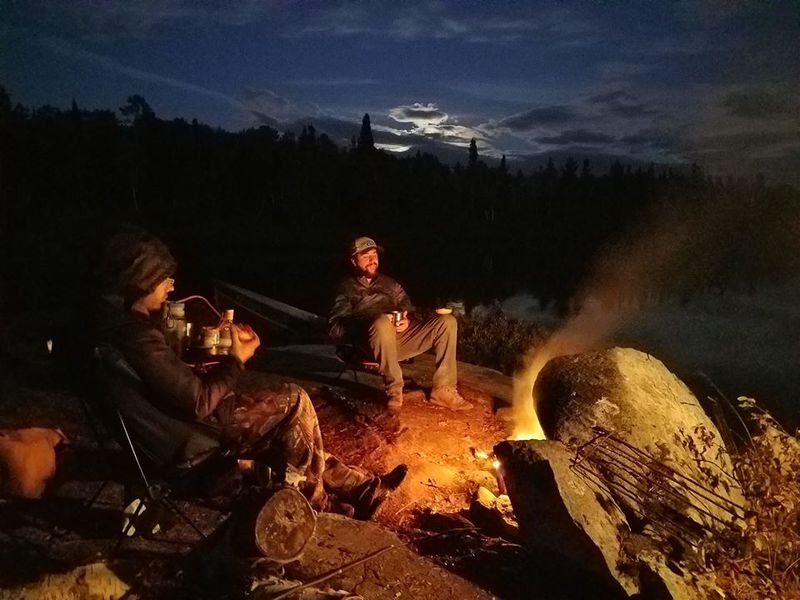
My father loves telling fishing stories—embellished tales of the one that got away, trophy catches from decades past, near-disasters that became funny with time. I worried these stories would feel old to my son, who lives in a world of 60-second videos and constant stimulation.
The first two evenings, my son stayed polite but not engaged. By the third night, something shifted. Here’s what changed:
He now had his own stories. When you fish all day in genuinely remote water—water where you never see another boat, where you’re finding structure and patterns yourself—you have experiences worth sharing. The 38-inch Northern Pike my son caught on Day 3 was a wild fight that became his entry into the storytelling tradition. He could tell his own story with emotion because he’d earned it.
The stories connected across time. Grandpa described fishing this exact lake system in 1961 when outposts were canvas wall tents and you hand-pumped water. I described my first trip here in 1987 when I was my son’s age. Now my son had 2024. The lake, these rocks, the fish… remained constant—the connector across generations of family history.
Boredom became productive. Without phones or TV, the initial discomfort of “nothing to do” naturally released creativity. By mid-week after my sons big catch, he was asking Grandpa questions about tackle , how lures worked, what made certain bays have more fish. These weren’t polite questions—they were genuine curiosity born from struggling together and sharing a truly exciting experience.

How Do You Handle Three Different Fishing Skill Levels Without Anyone Feeling Frustrated?
This was my unspoken worry. Grandpa has forgotten more about fishing than I’ll ever know. I’m competent. My son is enthusiastic but inexperienced. How do you keep everyone engaged?
The lake’s diversity solved the problem. With five major species available—Walleye, Northern Pike, Bass, Lake Trout, and Muskie—we could target different fish based on skill level and energy:
Morning Fishing Partnerships (By Skill Match)
Grandpa + Son (Walleye):
- Walleye fishing rewards patience and subtle technique
- Slower pace suited Grandpa’s stamina
- Repetition helped my son develop feel for strikes
- High catch rates kept both engaged
Dad + Son (Northern Pike):
- Aggressive topwater action created excitement
- Faster pace matched teenage energy
- Explosive strikes forgave imperfect technique
- Visual fishing kept attention focused
Dad + Grandpa (Lake Trout):
- Technical jigging in deep water
- Conversation-friendly (long drifts between fish)
- Allowed processing of family dynamics as peers
- Nostalgia and reflection time
Afternoon Exploration (Mixed Groups)
By afternoon, when everyone had caught fish and proven themselves, the partnerships became less about skill matching and more about shared discovery. We’d venture into bays marked on the outpost map as “unexplored” or “limited pressure.”
What “never run out of new spots to fish” actually means: The outpost’s lake system featured dozens of interconnected bays, channels, and structures. Even fishing 8-10 hours daily for seven days, we explored perhaps 30% of available water. Every afternoon brought genuine discovery—structure we found ourselves, patterns we figured out through trial and error.
Learn our species-specific techniques for northern Ontario waters →
This abundance of water meant no one felt pressured to “share” a productive spot or wait their turn. If one boat found active fish, the other could explore elsewhere without FOMO.
What Makes These Memories Irreplaceable Instead of Just “Nice”?
I’ve taken family vacations to beaches, mountains, and cities. They were pleasant. We have photos. But I don’t think about them in the quiet moments between tasks. The remote fishing trips—across three generations now—hold a different feeling space.
Why these memories imprint:
Shared Struggles Make Memories
When the weather turned on Day 5 (20 mph winds, whitecaps, sudden drop in temperature), we had to make real decisions with real consequences. Grandpa’s weather reading became critical. Dad’s boat handling mattered. My son’s ability to secure gear kept us organized. We needed each other, not in a manufactured team-building exercise, but in actual conditions where it mattered.
Returning to the cabin together, soaked but safe, created a shared story we’ll never forget. That doesn’t happen at a resort.
Isolation Removes Social Media
My son is a different person without cell service. The first 36 hours, he was restless, checking his dead phone reflexively. By Day 3, the phone stayed in his bag. By Day 5, he told me he didn’t miss it. Without the constant checking social media—crafting stories, maintaining streaks, responding to group chats—he was more relaxed than I’ve seen in a long time. He could just sit still.
That version of my son, the one not performing for an audience, is the one Grandpa got to know. That matters.
Tradition Creates Shared Experience
My grandfather can name every fish species by silhouette at 100 yards. He can read weather in cloud formations. He knows which lures worked in 1961 and why they still work today. But he doesn’t like to cheat with a fish finder, can’t remember which tackle box has which lures, and he has no use for modern GPS coordinates.
My son can’t read weather, doesn’t know species by sight, and couldn’t tie a proper fishing knot before this trip. But he taught Grandpa how to use the digital depth map, and even explained the Garmin.
The exchange of skills across generations—still brings a smile to my face—it’s what makes these trips irreplaceable. No one was just a passenger. Everyone contributes skills.
Do the Physical Details Actually Matter, or Is It Just About Being Together?
I used to think the setting was secondary—that family bonding could happen anywhere. After this trip, I’ve changed my mind. The place matters enormously because it creates the conditions for connection.
Why a remote outpost cabin enables something different:
The Cabin as Neutral Territory
Unlike someone’s house (where hosts and guests have different roles), the outpost cabin belonged to no one and everyone. Grandpa couldn’t retreat to “his chair.” My son couldn’t disappear to “his room.” We shared one screened porch, one kitchen, one main area.
The equalizing effect was profound. We negotiated meal timing, boat schedules, and evening activities as peers because no one was the boss.
The Work Creates Partnership
Fishing from remote outposts requires daily labor: starting and maintaining the wood stove, pumping and purifying water (even with running water, we supplemented from the lake), cleaning fish, preparing meals, dishes, cleaning the boats, managing gear, and planning the next day.
This work isn’t chores—it’s shared survival. When my son filleted his first Walleye under Grandpa’s instruction, then we cooked it together for dinner, the entire chain from lake to plate involved all three generations.
That never happens in modern life.
The Boats Force Proximity
Two people in a 16-foot boat, fishing all day, can’t avoid conversation. There’s no walking away, no changing the subject by moving to another room, no buffering uncomfortable silences with television.
Some of our best conversations happened during the long, quiet drifts between fish. My father and I healed over topics we’d been avoiding for years. My son asked questions about family history he’d never thought to ask. Grandpa told stories about his own father (my great-grandfather) that I’d never heard.
The boat created space for family openness.
What Surprised Me Most About the Week?
I expected good fishing. I expected beautiful scenery. I expected family time. What I didn’t expect was how the trip would reset my understanding of what my son needs, what my father fears, and what my grandfather valued.
My son doesn’t need constant stimulation—he needs meaningful challenge. By Day 6, he was studying the lake map in the morning, planning which bays to explore, talking about structure based on contour lines. His phone sat unused because his brain was engaged in three-dimensional problem-solving that social media can’t provide.
My father fears irrelevance more than physical discomfort. Watching him teach my son boat handling, seeing him recognized as the critical weather expert, observing how his decades of experience still mattered—these moments visibly touched something in him.
My father values continuity over nostalgia. I thought he’d spend the week talking about “how things used to be.” Instead, he was curious about new techniques, interested in modern tackle, fascinated by how the lake had changed since the 1960s. He didn’t want to recreate the past—he wanted to witness the tradition continuing forward.
Can This Experience Actually Transfer to Daily Life, or Does It Only Exist in Wilderness?

We’ve been home for three weeks now. Here’s what persisted:
My son texts less during family meals. Not zero—he’s still 16—but noticeably less. When I asked him why, he said, “I don’t know, I don’t need it so much now.”
Sunday dinners now include Grandpa weekly instead of monthly. The trip revealed how much time we’ve been wasting, and losing. My father started organizing these, and we’re all glad they’ve stuck.
I actually process my father’s advice differently. After watching him read weather patterns that saved us from dangerous conditions, after seeing his boat handling in rough water, after observing his patience with my son’s endless questions—I trust his judgment in new ways. His advice on my career situation landed differently last week, and that feels good too.
The photos matter less than I expected. We took hundreds of photos—fish, sunsets, the cabin, silly moments. But when we talk about the trip, no one says “remember that picture.” They say “I remember that first tug when I hooked that Pike” or “remember what Grandpa said about the wind shifting” or “remember the taste of that shore lunch!?” The memories are what the photos are for.
Who Should—and Shouldn’t—Attempt a Multi-Generational Remote Fishing Trip?
After my trip across three generations, I have strong opinions about who this serves well and who it might frustrate.
This experience suits families who:
- Value competence over comfort (though modern outposts provide both)
- Can handle 3-7 days without digital entertainment
- Want to reset family dynamics through shared challenge
- Have at least one generation with fishing experience to teach
- Can navigate age-related limitations without resentment
- Seek experiences that create lasting stories, not just photos
This probably isn’t for families who:
- Need constant entertainment infrastructure
- Can’t tolerate discomfort (weather changes, bugs, isolation)
- Have members who require daily medical access
- Expect resort-level food and amenities
- Have family members unable to compromise on daily schedules
The critical prerequisite: At least one family member must want to fish. If the teenager is going under protest, or Grandpa is participating only out of obligation, the trip likely won’t work. Remote fishing requires genuine shared interest because the fishing is the activity—there’s no backup entertainment.
What Actually Makes These Trips Worth the Significant Cost?
Let’s be direct about economics. A week-long fly-in remote outpost trip for three generations costs more than a drive-to cabin or camping trip.
It’s significant for most families.
Here’s what you’re actually paying for:
Guaranteed time. My father can’t “check work email” at 25 air miles from civilization. My son can’t “just scroll for a minute” without cell service. Grandpa can’t cancel last-minute due to comfort concerns because the cabin has running water and heat. The money purchases captive family time that’s otherwise impossible to secure.
Ecosystem preservation. Fly-in-only access keeps these lakes pristine specifically because the remote access limits traffic. You’re paying for uncrowded water that still holds trophy fish—something increasingly rare in accessible locations.
Life-stage urgency. My grandfather is 68. He’s in excellent health, but realistically, how many more of these trips does he have? The cost feels different when you understand it’s buying time-limited experiences. We’re not paying for luxury—we’re paying for a bucket list experience.
Irreplaceable memory formation. Three weeks later, my son unprompted brought up specific moments from the trip during unrelated conversations. The memories hit deeply because they involved real physical challenge, exciting novelty, and meaningful family connection. Compare that to a family get together he barely remembers three months later because he was on his phone the whole time.
Investment in relationship. The connection between my father and son—the mutual respect, the inside jokes, the shared struggle—that memory persists. Sunday dinners are different now. That has compounding value over years.
How Do I Explain to My Son Why This Trip Matters More Than the Others?
On our last evening at the outpost, watching the sun set over the lake we’d fished for seven days, my son asked, “Why does this feel different than other vacations?”
I gave him a historian’s answer:
“Because this is the same lake your great-great-grandfather fished in 1947. The same lake Grandpa first flew into in 1961. The same lake I learned to fish in 1987. And now it’s yours. The technology changes—Grandpa used a map and compass, I had paper charts, you’re looking at GPS—but the lake, the fish, the challenge, they’re constant. You’re connected to something that started before your own life and will be here after you.”
He was quiet for a minute, then said, “So we’re like… part of a story that was happening before we got here?”
“Exactly. And that story continues after we leave. Maybe someday you’ll bring your grand kids here.”
That continuity—the sense of participating in something that spans time—that’s what makes certain experiences irreplaceable. Not because they’re more fun or more comfortable or more Instagrammable, but because they locate you in a lineage of shared experience.
Most family vacations create isolated memories that belong only to the people present. Remote fishing trips in places like this—places your grandfather fished, places your children might fish—create memories that connect across time.
Final Reflection: What the Float Plane Ride Out Revealed
As our floatplane lifted off the lake for the return flight, I watched my son and father sitting across from each other in the aircraft, my son still talking about the last monster Northern Pike he caught that morning. My father was quieter than usual.
“What are you thinking?” I asked over the engine noise.
“That I spent too many years not doing this,” he said smiling. “When my dad invited me in the ’80s, I was always too busy with work.”
That recognition—the limited time of these opportunities—is what makes them sacred. The calendar is undefeated. Aging is inevitable. The window for three-generation trips is measured in years, not decades.
But here’s what I’ve learned: While you can’t stop time, you can make certain memories count more than others. The trips where three generations share and face challenges together, rely on each other’s skills, and create stories that persist—those memories become family lore. They’re the stories that get told at future gatherings, the experiences that shape how grandchildren understand their heritage, the moments that prove family connection isn’t just genetic luck but something actively built through intention.
The floatplane banked south, and the lake disappeared behind us. But the stories we’d created, the skills my son had learned, the conversations we’d finally had, the reset in our family dynamics—those came home with us.
That’s what makes it irreplaceable. Not the fish we caught, not the cabin we stayed in, not even the pristine shore where we cooked our shore lunch. It’s the transformation of three individuals into a family crew, across generations, and the creation of shared memory that locates all of us in something larger than ourselves.
And that, I told my son on the drive home from Nestor Falls, is worth every dollar and every minute we invested.
Ready to create your family’s next chapter in a lineage of fishing stories? Our fly-in outposts across Northern Ontario offer the isolation, comfort, and abundant fishing that make multi-generational trips possible. The window is finite. The memories are forever.
Pingback: Fly in Fishing Trips at the Minnesota Sportsmen's Show