 William Forsyth
Great service, cabins, and staff. Very helpful and accommodating. 5 of us just spent 6 days at one of their outposts and had a wonderful time. We will be returning.

We love our summer! It’s a kaleidoscope of reunions with friends, groups and families who are on holidays. Over the decades, we’ve been able to collect up the questions that people ask most often – plus – we’ve also found an important few tips that everyone taking a Fly in Fishing trip will benefit to know.
Trip Planning
Also see Nestor Falls Weather
I always tell groups to arrive the night before. Your departure from our base is typically between 9:00 AM and noon, and after a full day of driving or flying, dealing with customs, and getting your gear sorted, you don't want to rush that morning.
Come in the night before, get a good sleep, and show up at the dock rested and ready.
My recommendation is to stay right here in Nestor Falls rather than Fort Frances. You're close to our base, the area is beautiful, and you're already in the rhythm of being up here. There are several places I send groups to:
Kelly's Castaway Lodge — Right around the corner from our air base. Kelly Wilson runs a great operation. He actually runs fly-out day fishing packages with us too, so he knows exactly what our guests need. 1-877-580-2335
Clark & Crombie Hotel — Their 18 unit motel is open year around and offers a variety of room types. (807) 484-2114
Arrowhead Resort and Motel — Clean comfortable accommodations in a family atmosphere (807) 484-2132
Any of these will take care of you. Just mention you're flying out with Northwest Flying in the morning and they'll know the drill.
If you'd rather stay in Fort Frances, that works too — it's about a 30-minute drive from our base — but plan your morning accordingly. You need to be at our dock before 9:00 AM.
One more thing: if you get into Nestor Falls the evening before, you're welcome to bring your groceries and gear over to our base that night. We'll put your food in our walk-in cooler and freezer so everything stays fresh for the morning. That way you show up with just your personal bag and we load up and go.
Have questions about timing? Call me at (800) 461-2126 and we'll work out the details for your group.
Last reviewed: 2026-03-14You're bringing your own food for the trip, and the smartest thing most groups do is pre-order their groceries rather than packing them from home.
Here's what I recommend: call Cloverleaf Grocery in Emo, Ontario. Emo is the halfway point between the Fort Frances border crossing and our base in Nestor Falls — about 30 minutes in either direction. Call them ahead of time with your grocery list and they'll have everything boxed up and ready for you when you arrive. Their number is (807) 482-2793.
Most groups stop in Emo on their way up, grab their pre-ordered groceries at Cloverleaf, pop into the liquor store right next door for beer and drinks, and then drive the last 30 minutes to our base. It's a smooth routine — our customers have been doing it for years.
If you're arriving the evening before your trip, bring your groceries to our base that night. We've got a walk-in cooler and freezer right here, and we'll store everything overnight so it's fresh and ready to load in the morning.
For meal planning, we've put together a ➜complete trip planning guide with suggested grocery lists for groups of four and eight — including breakfast, lunch, dinner, and all the condiments and supplies people forget. Use our "Special Report" to help when planning your grocery order. It covers everything from shore lunch supplies to how much ice to bring.
A few tips from experience: pack your groceries in sturdy cardboard boxes, not plastic bags — they load easier into the float plane. Remember that everything counts toward your 100 lb per person weight limit, so our complete trip planning guide will help you plan smart.
Need help with your grocery plan? Call me at (800) 461-2126 and I'll walk you through it.
Last reviewed: 2026-03-14Two things you need to sort out before you hit the lake: bait and your Ontario fishing license. Both are straightforward.
Bait: My go-to recommendation is Bite Me Bait & Tackle in Nestor Falls. Trevor runs the shop, and he's just a quarter mile down the road from our air base. What makes Trevor different from a regular bait shop is that he's also a fishing guide who knows our lakes. Tell him which lake you're heading to, and he'll set you up with the right bait and probably give you a few tips on what's working. He's a great resource, especially for groups who haven't fished this area before. 807-484-0707
If you're coming through Fort Frances, there's also Westside Bait & Tackle just as you're leaving town heading north. It's a family-run operation — another solid option if you want to grab your bait before the last leg of the drive. +1 807-274-7606
Fishing Licenses:
Every angler in your group needs a valid Ontario fishing license. You've got three options:
The easiest route for non-residents is buying them online before your trip through the Ontario Ministry of Natural Resources website. Takes about 10 minutes, you print them out, and you're done before you leave home.
You can also pick one up at a local tackle shop like Bite Me when you arrive, or send me everyone's information ahead of time and I'll help coordinate it for you.
Most groups go with the Sport License — it runs about $55 USD for eight days and gives you higher daily catch limits. The Conservation License is about $30 USD with lower limits. For the kind of fishing you'll be doing on our lakes, the Sport License is worth the extra $25.
My advice: sort out your bait and licenses before departure day. One less thing to think about when you show up at the dock ready to fly.
Call me at (800) 461-2126 if you need help with any of this.
Last reviewed: 2026-03-14


 Zinn Decker
William Forsyth
Zinn Decker
William Forsyth
With lake trout, timing your trip is less about moon phases and more about water temperature and seasonal patterns. Lake trout are a cold-water species — they need water in the 48 to 55 degree range to be most active — and that drives everything about when and how you fish for them. On our lakes, Loonhaunt and Ajax both hold lake trout in deep, clear water, and Kishkutena has them too. The biggest factor in your trip timing is the split between spring and summer behavior.
Right after ice-out in late May and into early June, lake trout are shallow — sometimes in ten to fifteen feet of water — feeding aggressively after the long winter. That's the easiest window to catch them because you can cast or troll in shallow water without specialized deep-water gear. Once the surface water warms through June and into July, those fish drop to 40, 60, even 80 feet, and now you're jigging heavy spoons and tubes straight down or trolling with downrigger-style setups.
That's more technical and demands heavier gear and electronics if you have them.
Moon phases matter less for lake trout than they do for muskies. Lakers are structure-oriented and temperature-driven — they relate to deep rock humps, steep drop-offs, and the thermocline more than they respond to lunar cycles. What does matter is barometric pressure. A stable or slowly falling barometer tends to keep them feeding, while a sharp pressure spike after a cold front can shut them down, same as any species. Fall — September into early October on our lakes — is another strong window because the surface water cools again, the thermocline breaks down during lake turnover, and lake trout move shallower and feed heavily before winter. That fall window overlaps with our best walleye and pike fishing too, so your group gets the full package.
The Ontario season for lake trout closes September 30 in our zone, so if lake trout are a priority, you need to plan accordingly and not book into October. A good day of lake trout fishing on our lakes might produce 10 to 15 fish, and these are slow-growing fish that deserve careful handling — we strongly encourage catch-and-release for anything over 20 inches.
So here's what would help me point you in the right direction — are you looking to target lake trout as the primary species, or is this more about having lake trout as one option alongside walleye and pike during a multi-species trip?
Last reviewed: 2026-03-15Lake trout make this evaluation pretty simple because they're picky about where they live. They need cold, deep, well-oxygenated water — and that means clear lakes with significant depth and rocky structure. You're not going to find lake trout thriving in shallow, tea-stained, weedy water. That's walleye and pike territory. Lake trout need that clean, cold Canadian Shield water with rock basins that hold temperature through the summer.
On our system, that narrows your lake trout options to three lakes: Loonhaunt, Ajax, and Kishkutena. All three have the depth, clarity, and rocky structure that lake trout require. Cleftrock is a three-lake system with classic tea-colored walleye water — fantastic for walleye numbers, but that's not lake trout habitat. Gordon is our trophy walleye and muskie lake, but it's not listed as a lake trout water either. So if lake trout are part of your plan, the lake selection conversation starts with those three.
Within those three, the structure type matters for how you'll fish. Rocky points that drop sharply into deep basins are your primary targets in summer — lake trout cruise those break lines and hold on underwater humps where they can ambush cisco and other baitfish in cooler water below the thermocline. Kishkutena is heavily rocky throughout with shoreline structure that creates those kinds of drop-offs. Loonhaunt is a big, sprawling system with a mix of structure types — you'll find deep rock basins for lake trout alongside shallower weedy bays that hold walleye, pike, and bass. That variety is why Loonhaunt is our most popular lake overall. Ajax gives you five connected lakes with portages between them, so you've got the ability to explore different basins and find where the lakers are stacked on any given day.
The key thing to understand is that water clarity and lake trout go hand in hand. Clear water means light penetrates deeper, which supports the cold-water food chain these fish depend on. If someone is showing you a stained, shallow lake and telling you it's great lake trout water, that should raise a flag. Lake trout evolved in deep, cold, clear environments, and that's where they reach trophy size.
One more thing worth mentioning — early season, right after ice-out in late May and June, the surface water is still cold enough that lake trout come shallow. During that window, you can catch them in ten to fifteen feet over rocky structure, and the water type evaluation becomes less about depth and more about finding the right rocky shoreline with access to deep water nearby. As summer progresses and the surface warms, they retreat to depth and you're jigging 40 to 80 feet down. That seasonal shift is the biggest variable in how you'll actually fish for them, regardless of which lake you choose.
So here's what I'd want to figure out with you — is lake trout the primary species driving your trip, which would point you toward Kishkutena or Ajax, or are you looking for a lake like Loonhaunt where you can target lake trout as part of a broader multi-species experience?
Last reviewed: 2026-03-16Most serious muskie anglers I talk to are planning their trips for two windows: mid-summer and fall. Once the Ontario muskie season opens on the third Saturday in June, you'll see some guys head up right away, and that early-season bite can be productive as muskies are transitioning out of post-spawn and starting to feed along weed edges and rocky points. But the real trophy hunters? They're booking September and early October.
That's when the water starts cooling, the lake turnover happens, and those big females are feeding aggressively to build up fat reserves for winter. On our lakes — Gordon, Loonhaunt, and Kishkutena all hold muskies — fall trips have been our fastest-growing booking months. The bugs are gone, the boreal forest lights up with fall color, and the fish are in full-on feed mode.
Summer is great too, especially July and August, when muskies stack up along deep weed lines, break lines, and structure edges. You'll work early mornings and evenings for the best action. But if your group's goal is a legitimate shot at a trophy-class fish, fall is the window experienced muskie anglers target.
So let me ask you — is your group leaning toward a summer trip where you can mix muskie in with other species, or are you committed enough to the muskie game that a dedicated fall trip makes more sense for what you're trying to accomplish?
Last reviewed: 2026-03-15That's one of the best things about our system — you don't have to choose between muskie and consistent action on other species. Loonhaunt Lake is our most popular lake for exactly this reason. It holds walleye, northern pike, smallmouth bass, lake trout, and muskie all in the same water.
It's a big, sprawling system with tons of structure, so your group can spend the morning jigging walleye on rocky points, switch to casting for pike in the shallows after lunch, and then dedicate the evening to working muskie spots along deep weed edges and break lines. Gordon Lake is another strong multi-species option. It's our trophy walleye lake — 36 minutes out by floatplane — and it also holds pike and muskie.
The fishing is a bit more technical, so I recommend it for groups with some experience. Kishkutena is your third option. It's primarily known for bass and lake trout, but it holds muskie too, and the rocky structure is classic muskie habitat.
All three lakes give you the ability to keep rods bent on walleye and pike while dedicating time to the muskie hunt. That balance matters because muskie fishing requires patience — they call it the fish of ten thousand casts for a reason — and having walleye and pike action keeps the energy up between muskie encounters. Here's what would help me point you to the right lake — how experienced is your group with muskie specifically, and is muskie the primary goal, or more of a bonus species you'd like a shot at while targeting walleye and pike?
Last reviewed: 2026-03-15The biggest thing I hear from experienced muskie guys after their first trip up here is that they wish they'd brought heavier gear and more variety in their tackle. Northwestern Ontario muskies are wild, powerful fish that live in pristine water with abundant forage, and they fight differently than fish in heavily pressured waters down south. Bring heavy casting rods rated for big baits — 80-pound braided line minimum — and a good selection of large bucktails, glide baits, jerkbaits, and rubber.
Wire leaders are non-negotiable. The second thing guys wish they'd known is how important the figure-eight technique is up here. When a muskie follows your bait to the boat — and they will — you need to execute a smooth, wide figure-eight with your rod tip in the water.
A lot of first-timers panic on the follow and pull the bait away. That figure-eight is where a significant number of strikes happen. Third, the weather up here can change fast.
Bring layers and quality rain gear even in summer. A cold front can roll through and change conditions overnight. And finally, bring proper release tools — long-nose pliers, bolt cutters for hooks if needed, a big rubber-coated net, and know how to handle these fish safely in the water.
They're apex predators and deserve careful handling. The fish you release is the trophy someone else — or you — catches next time. So let me ask — have you done much casting with heavy muskie-specific gear before, or would this be your group's first time committing to that style of fishing?
Last reviewed: 2026-03-15On clear lakes like Loonhaunt and Ajax, mid-summer walleye often drop to 15 to 30 feet during bright conditions, holding on rocky humps, deep points, and the edges of the thermocline. Dawn and dusk bring them shallower — 8 to 15 feet on structure. On stained water like Cleftrock, walleye stay shallower all day because the reduced light penetration keeps them comfortable in 8 to 18 feet even at midday. Stained water is generally easier to pattern because the fish don't make those dramatic depth changes. Both water types produce well — it's just a different rhythm to the day.
Does your group have experience adjusting depth throughout the day, or do you tend to stay at one depth and wait for the fish to come to you?
Last reviewed: 2026-03-15Most guys overpack tackle and underpack food. For a week of walleye fishing, you need two to three dozen jigs in assorted weights and colors, a couple bags of soft plastics, a handful of crankbaits, some live-bait hooks and sinkers if you're running minnows, and spare line. That's it. Leave the five extra rod-and-reel combos, the giant tackle bag, and the specialty stuff at home.
Your 100-pound weight limit includes everything — gear, food, drinks, clothes so we put together at trip planning guide that covers tackle, clothes and food your group needs. Every extra pound of tackle is a pound less of groceries. Two rods per angler, one tackle box, and confidence in your basics will outfish a boat full of unused lures every time.
Has your group weighed out your gear and food yet, or are you still figuring out how to make the weight limit work?
Last reviewed: 2026-03-15The biggest pike come from lakes with large weedy bays, abundant forage, and low fishing pressure. On our outpost system, Loonhaunt and Cleftrock are strong pike lakes — Loonhaunt because it's a sprawling system with extensive shallow structure, and Cleftrock because the tea-colored water and weedy bays concentrate pike in predictable zones. Ajax and Gordon hold pike too.
On the camping side, nearly every lake in our system has northern pike — Arrow, Barass, Carsten, O'Dell, and more. Pike thrive in the same Canadian Shield waters that produce great walleye, so you've got options on almost any lake you choose.
Is trophy pike the main goal for your group, or are you looking for a lake where pike are part of a multi-species mix?
Last reviewed: 2026-03-15Our bass lakes tend to be clear Canadian Shield water — you can often see bottom in six to ten feet. That clarity is what makes the smallmouth fishing so good, because the habitat is rocky and visible, and bass thrive on that structure. It also means the fish can see your presentation from a distance, so natural colors, lighter line, and more finesse matter compared to stained-water fishing.
Bring tubes in green pumpkin and smoke, jerkbaits in natural baitfish patterns, and consider fluorocarbon leaders if you're throwing finesse stuff. For topwater, anything that creates a good silhouette works regardless of clarity.
See our Nestor Falls Weather and Business page for local bait shops.
Do you typically fish clear water where you're from, or is this going to be a different game than what you're used to?
Last reviewed: 2026-03-15Tubes are king on Canadian Shield smallmouth water — a 3.5- to 4-inch tube on a 1/4-ounce jig head, dragged and hopped along rocky bottom, is about as reliable as it gets. Jerkbaits work well in spring and fall when fish are shallower and more aggressive.
Dropshotting is deadly on mid-summer humps when bass are holding in 15 to 25 feet. Ned rigs produce too, especially on tough days.
And don't overlook topwater — poppers and walking baits over shallow rock are some of the most exciting fishing you'll ever experience. Pack a mix and let the fish tell you what they want each day.
How much tackle weight are you planning to bring? Remember, you've got a 100-pound-per-person limit on the floatplane, so our packing guide matters.
 Glen and Anne Carradice
 M Cummins
 malibuswo


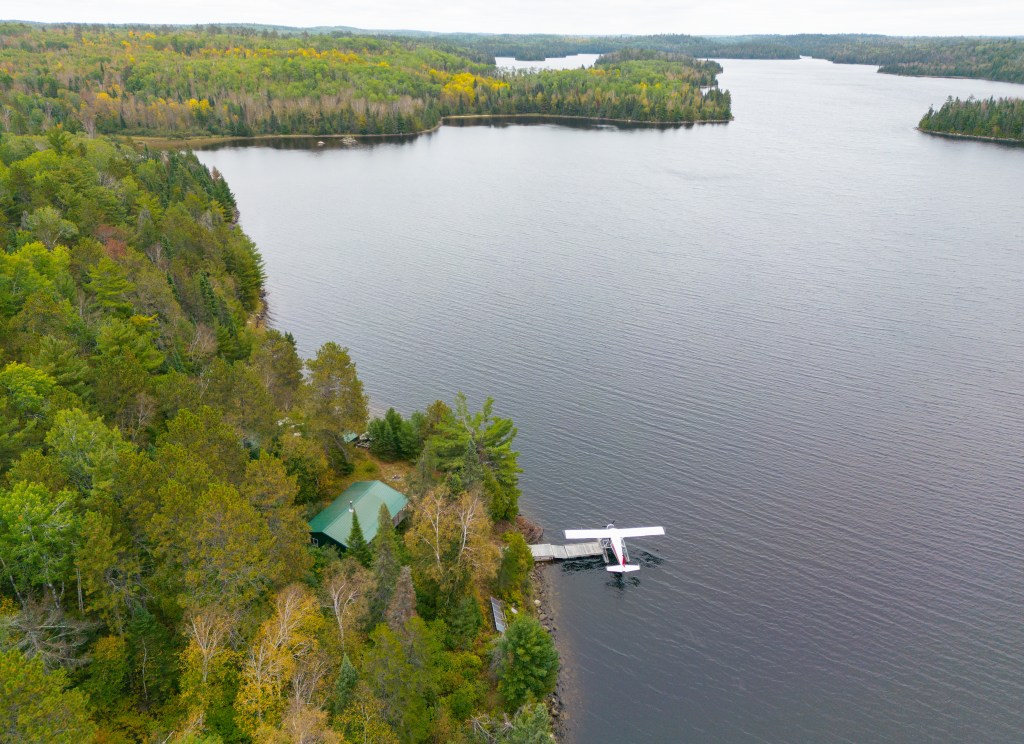
Good question. So a fly-in trip means we use floatplanes to get you to lakes that have no road access – they’re completely remote.
You and your group are the only people on that entire lake for the week. Compare that to a drive-to lodge where you’re sharing the lake with other boats, other guests, maybe locals who live nearby. The fishing pressure is totally different.
On our lakes, the fish haven’t seen many lures, so they’re more aggressive and you catch more. Plus, there’s something about landing on a wilderness lake in a floatplane that just sets the tone for the whole trip.
Does your group value that kind of exclusivity, or are you more focused on convenience?
Last reviewed: 2026-03-09I think it depends on what you’re after. If you’re just looking for a cheap place to stay and you’re fine sharing the lake with a bunch of other boats, then yeah, drive-to is cheaper.
But here’s what I hear from groups who’ve done both: on a drive-to lake, you’re competing for the good spots. On a fly-in lake, you’ve got the whole place to yourselves.
That means better fishing, no crowds, and honestly, a way more memorable experience. Most of our customers tell me they’d rather go fly-in every other year than drive-to every year, because the fishing and the experience are just that much better.
What’s more important to your group – saving a few bucks, or having a trip people will still be talking about in ten years?
Last reviewed: 2026-03-09Our lakes are only accessible by floatplane – no roads in or out.
When we say “private lake” or “exclusive access,” we mean your group is the only group on that lake for your entire stay. There’s one cabin, and it’s yours.
You won’t see another boat, another angler, or another soul unless you want us to fly someone else in (which we won’t). Some outfitters say “remote” but still have multiple cabins on the same lake or allow day-trippers. We don’t do that. It’s just you and your group.
Does that level of seclusion sound like what you’re looking for, or would you prefer having other people around?
Last reviewed: 2026-03-09For a first trip with a mixed group, I’d say walleye and northern pike are your best bets.
Walleye because they’re consistent – you’re going to catch them, and they’re great eating. Pike because they’re aggressive and fun to catch, so even beginners get that excitement.
Smallmouth bass are incredible fighters, but they can be a bit more technical.
Lake trout are awesome, but they’re deep-water fish in the summer, so it’s more of a specialized technique. That said, a lot of our lakes have multiple species, so you can try a bit of everything.
What kind of fishing experience does your group have – are we talking total beginners, or do you have some guys who know what they’re doing?
Last reviewed: 2026-03-09Most groups do 5 to 7 days. That gives you enough time to settle in, learn the lake, and really get into a rhythm without feeling rushed.
If you’re doing a shorter trip – like 3 or 4 days – it can feel like you just got there and it’s already time to leave. But 7 days can feel long if you’ve got guys who aren’t used to being off the grid.
I’d say 6 days is the sweet spot for most groups – long enough to feel like a real adventure, but not so long that people start missing their phones. What are you thinking – long weekend or full week?
Last reviewed: 2026-03-09Great question, because timing makes a huge difference. Early season – late May into June – the fishing is incredible. Walleye are aggressive, pike are in the shallows, and the catch rates are off the charts. But the bugs can be rough, especially black flies.
Mid-summer – July and August – the bugs calm down, the weather is beautiful, and the fishing is still excellent, though fish move a bit deeper.
Fall – September into early October – is trophy time. The fish are feeding heavily, the bugs are gone, and you get beautiful fall colors. Weather can be unpredictable, though.
Most groups book mid-May through July with September and October our fastest growing months. What’s your group’s tolerance for bugs versus desire for peak fishing?
Last reviewed: 2026-03-09It’s actually not that demanding. You’re not portaging canoes or hiking miles into the bush. The floatplane drops you right at the dock. The cabins are comfortable – we’ve got running water, indoor showers, real beds. Fishing is from a boat with a motor, so you’re not paddling all day.
The most physical thing you’ll do is filleting fish and maybe carrying groceries from the plane to the cabin. I’ve had groups with guys in their 70s who do just fine.
But remember, you are off the grid – no hospital nearby, no pavement, no easy exit if someone has a medical emergency. Does your group have anyone with serious health concerns we should know about?
Last reviewed: 2026-03-09Beginners do great on our lakes. The fishing pressure is so low that the fish are aggressive – they’ll bite even if you’re not doing everything perfectly. Walleye and pike are especially forgiving.
We’ll give you a quick orientation on the lake, show you some good spots on a map, and you’ll figure it out pretty quick.
That said, we don’t provide a guide, so you’re on your own once we drop you off. If you’ve got total beginners, I’d recommend pairing them with someone who has at least a bit of experience, just so they’re not totally lost.
Does your group have a mix of skill levels, or are we talking all rookies?
Last reviewed: 2026-03-09Most groups fall into a rhythm pretty quick. You wake up when you want – no schedule.
Make some coffee, cook breakfast, then head out on the lake. Fish until lunch, come back for a shore lunch or a sandwich, then head back out. Fish until dinner, come back, cook up some walleye, sit on the deck, have a few beers, tell stories. Some groups fish until dark.
Some guys are done by 4 PM and just relax. It’s totally up to you. There’s no WiFi, no TV, so you’re either fishing, eating, or sitting around the fire.
That simplicity is part of the appeal. Does that kind of unstructured, off-the-grid routine sound good to your group, or do you need more activities?
Last reviewed: 2026-03-09Pretty straightforward. You arrive at our base in Nestor Falls by 8 AM on departure day.
We load your gear, do a quick safety briefing, and then we fly you to your lake – usually 15 to 25 minutes depending on which lake you’re going to. We unload at the dock, give you a quick orientation on the cabin and the lake, and then we fly back to base.
You’re on your own until pickup day. We come back at the agreed time, load you up, and fly you back to base. The whole process is smooth – we’ve been doing this since the early 60s.
Last reviewed: 2026-03-09I’ve flown in a lot of bachelor parties and guys’ trips over the years, and they love it. It’s remote, yeah, but that’s kind of the point – you’re away from everything, no distractions, just your buddies and the lake.
Guys fish all day, drink beer, tell stories, and give each other hell. It’s not a party town with bars and clubs, so if that’s what you’re after, this isn’t it. But if your group is looking for bonding time, great fishing, and a trip everyone will remember, it’s perfect.
The best bachelor parties I’ve seen are the ones where the groom and his buddies just fish, relax, and enjoy being off the grid together. Does that sound like your group’s vibe, or are you looking for more nightlife?
Last reviewed: 2026-03-09Bad weather happens – it’s part of being in the wilderness. Most groups just fish through light rain. If it’s really nasty – lightning, heavy storms – you stay in the cabin, play cards, cook a big meal, and wait it out.
The cabins are comfortable, so it’s not like you’re roughing it. Some guys bring books or just catch up on sleep. Usually, weather clears within a few hours, and you’re back out on the water.
The worst case is if weather delays your pickup flight, but that’s rare, and we’ll work with you to get you out as soon as it’s safe to fly. Does your group handle downtime well, or do you need constant action?
Last reviewed: 2026-03-09Self-catered outposts like ours give you the cabin, the boats, and the motors, but you bring your own food and do your own cooking.
It’s more work, but it’s way more affordable, and a lot of groups like the freedom of setting their own schedule and eating what they want. Plus, doing a shore lunch with fish you just caught is part of the experience.
Does your group want the full-service treatment, or are you comfortable handling your own meals?
Last reviewed: 2026-03-09Absolutely. Even if someone’s not super into fishing, there’s a lot to enjoy. Wildlife is incredible – loons, eagles, moose, black bears (from a safe distance). The scenery is stunning, especially in the fall. Campfires at night are a big part of the experience.
Some groups bring cameras and just spend time photographing the lake and the wildlife. We can also arrange sightseeing flights if someone wants to see the area from the air.
For most, the main activity is fishing, so if you’ve got someone who really doesn’t want to fish at all, they might create photos and videos that we would be happy to feature on our blog.
Last reviewed: 2026-03-09Very safe. We’ve been flying these routes since the early 60s, and our pilots are among the most experienced bush pilots in the country.
We maintain our aircraft to Transport Canada standards, and we don’t fly in unsafe weather. Floatplane flying is different from commercial airline flying – it’s more hands-on, more dependent on weather and water conditions – but when done right, it’s extremely safe.
Our pilots know these lakes, know the weather patterns, and know when it’s safe to fly and when it’s not.
We’ve flown thousands of trips without serious incident. Yet, it’s still a small plane on a wilderness lake, so there’s always some inherent risk. Does anyone in your group have concerns about small planes, or are you all comfortable with it?
Last reviewed: 2026-03-09It can work, but it depends on expectations. The cabins are comfortable, the setting is beautiful, and there’s definitely space to relax on the deck, read a book, enjoy the wilderness.
But there’s no spa, no shopping, no WiFi, no restaurants. If someone’s coming along who really doesn’t want to fish and needs other entertainment, they might struggle.
I’ve had couples where one person fishes and the other just enjoys the peace and quiet, and they love it.
The key is making sure everyone knows what they’re signing up for. Does your group have people who are okay with downtime and solitude, or do they need more structured activities?
Last reviewed: 2026-03-09A few things. First, the water quality – these lakes are pristine, cold, and oxygen-rich, which is perfect for walleye, bass, and lake trout.
Second, the low fishing pressure – a lot of our lakes only see a handful of groups per season, so the fish populations are healthy and aggressive.
Third, the variety – you can target multiple species on the same lake, which keeps things interesting.
And fourth, the access – we’re just an hour from the US border, so you’re not flying to the Arctic to get here.
Other regions might have good fishing, but Northwestern Ontario has the combination of quality, variety, and accessibility that’s hard to beat. Have you fished in other regions, or is this your first time considering a fly-in trip?
Last reviewed: 2026-03-09You’ll have the place to yourselves. Kishkutena and Loonhaut are the only lakes where you not the only cabin on the lake, yet you rarely, if ever, see another group
We only book one group per lake at a time on Ajax, Cleftrock and Gordon, so there’s no other cabin, no other boats, no other anglers. It’s just your group.
When you’re on the lake, it’s yours.
The only time you might see another plane is if we’re flying a group to a different lake nearby, but even then, it’s just a quick flyover. Does that level of exclusivity matter to your group, or are you okay sharing the water?
Last reviewed: 2026-03-09It varies, but the popular times – late June, early July, and early September – fill up fast, so check our availability.
I’d say if you’re planning for prime season, book 6 to 12 months in advance to get your first choice of dates and lake. If you’re flexible on timing or can go mid-summer, you can sometimes book a few months out. We only have 5 outpost cabins, and each one only books one group at a time, so availability is limited.
If you’ve got specific dates in mind, I’d recommend calling sooner rather than later to see what’s open. Are you looking at a specific time frame, or are you still exploring options?
Last reviewed: 2026-03-09Absolutely. Even people who don’t care much about fishing love the floatplane ride.
There’s something about taking off from the water, flying low over the wilderness, and landing on a remote lake that’s just unforgettable. We’ve had people say the flight alone was worth the trip.
Plus, it’s not a long flight – 15 to 25 minutes – so it’s exciting without being nerve-wracking for people who are nervous about small planes.
And when you land on your lake, unload, then the plane flies away and you realize you’re completely off the grid, that’s a moment people remember.
Does your group have anyone who might be hesitant about the flight, or is everyone on board with the adventure?
Last reviewed: 2026-03-09Our cabins sleep anywhere from 2 to 8 people depending on which lake you choose. Loonhaunt, our biggest cabin, sleeps 8 comfortably. The others sleep 2 to 6. For boats, we provide one boat and motor for every two anglers – so if you’ve got 4 guys, you get two boats. If you’ve got 8, you get four boats.
Now, here’s what I tell people about group size: the ideal number is 4 to 6 for most lakes. That gives you enough boats to spread out and fish different spots, but you’re still all together at the cabin for meals and stories at night.
Last reviewed: 2026-03-09Most of our lakes, you’re fishing within 5 to 15 minutes of the cabin. These aren’t massive lakes where you’re running 30 minutes to get to good water. The cabins are positioned so you’ve got access to multiple types of structure – bays, points, drop-offs – all pretty close.
But, part of the fun is exploring. Some groups like to run across the lake to check out new water, and that might be a 20-minute boat ride. Others find a good spot 5 minutes from the dock and just work that area all week.
Last reviewed: 2026-03-09Ontario fishing regulations set the limits – for walleye, it’s typically 4 fish per person per day, with a possession limit. Pike is 6 per person per day. You need to check the specific regulations for the zone you’re fishing, and I can help you with that.
Now, here’s the practical side: we encourage shore lunch with smaller eating-size fish (16 to 18 inches for walleye), and we strongly encourage catch-and-release for trophy fish (24+ inches).
Those big fish are the breeding stock that keep the lake healthy. If everyone kept every big fish, the fishing would go downhill fast.
Last reviewed: 2026-03-09This is a big one. The limit is 100 pounds per person, and that includes everything – clothes, gear, food, drinks, ice, beer, the whole deal. If you go over, we charge $1 per pound overage, which isn’t the end of the world, but it adds up.
And here’s the cool thing – we’ve got detailed packing checklists that help groups of 4 and 8 pack more stuff.
☛ The Fly In Fishing Trip Packing Guide and Meal Planner.
Your Fly-In Trip Planning Guide
Everything you need to pack smart, eat well, and make the most of your remote fishing adventure in Northwestern Ontario.
Last reviewed: 2026-03-09Good question.
Here’s what’s included in all cabin packages.
Here’s what you need to bring.
Now, here’s where people sometimes get surprised: you’re bringing your own groceries, which means planning and packing. Some groups love that freedom. Others wish they’d thought it through better and end up eating beans and hot dogs all week.
One thing that helps a lot of our first-time groups is checking out the meal planning content from our Packing Guide – with an entire grocery list and meal plans for groups.
Have you guys thought about your meal plan yet, or is that still on the to-do list?
Last reviewed: 2026-03-09On a good walleye lake in peak season – late May through June – groups regularly report 50 to 100 walleye per day per person. I’m not exaggerating. The fishing pressure is so low that the fish are aggressive.
You’ll catch eating-size walleye all day long, plus you’ll hook into some bigger fish – 24, 26 inches – that you’ll want to release.
For bass, it’s a bit different. You might catch 20 to 40 smallmouth per day if you’re working the right structure. Pike, same thing – 20 to 30 fish per day if you’re targeting them. Lake trout are harder to quantify because they’re deeper and more technical, but a good day might be 10 to 15 fish.
Now, here’s the reality check: those numbers assume you’re actually fishing. If your group spends half the day drinking beer on the dock, you’re not going to hit those numbers. And if you hit a cold front or tough weather, fishing slows down everywhere. But on average, in good conditions, with guys who are actually fishing, those numbers are realistic.
What’s cool is when our guests post videos or reviews sharing their actual catch numbers – it gives future groups realistic expectations. We feature those honest guest stories on our website because they’re way more credible than anything I could say. When you share your experience, you help other anglers make better decisions.
Have you fished remote lakes before, or is this your first time? I ask because some guys expect it to be easy, and it is – but you still have to put lines in the water.
Last reviewed: 2026-03-09Great question. So here’s how our lakes break down:
Gordon Lake – 36 minutes out – is my trophy walleye lake. If you want a shot at a personal-best walleye, that’s where I’d send you. It also has pike and muskie, so it’s a good multi-species lake, but walleye is the star.
Cleftrock Lake – 35 minutes – is classic walleye water. Three-lake system, tea-colored water, great numbers and decent size. If you want consistent walleye action all day long, Cleftrock is hard to beat.
Ajax Lake – 25 minutes – is a five-lake system with portages between them. Walleye, pike, bass, and lake trout. It’s the explorer’s choice – great if your group likes variety and checking out different water.
Loonhaunt Lake – 19 minutes – is our most popular because it’s got everything: walleye, pike, bass, lake trout, and muskie. It’s a big, sprawling system with tons of structure. Most groups book Loonhaunt because it’s the all-around best.
Kishkutena Lake – 8 minutes – is the bass lake. Rocky shorelines, tons of smallmouth, plus muskie and lake trout. It’s our closest lake, so you get more fishing time on arrival day.
Here’s the thing: every lake produces, but they each have a personality. Some guys want trophy potential. Some want high numbers. Some want variety. If you book the wrong lake for your group’s style, you might be disappointed even though the fishing is good.
What helps a lot of groups is looking at the featured guest content on our website – real videos and stories from people who’ve fished these lakes. When you see someone holding a 28-inch walleye from Gordon or a stringer of bass from Kishkutena, you get a real sense of what each lake offers. And when you come back from your trip, your story becomes part of that library for the next group.
What’s your group’s priority – big fish, lots of fish, or a bit of everything?
Last reviewed: 2026-03-09Absolutely. Cleftrock and Loonhaunt are the most beginner-friendly. Walleye and pike are aggressive, the structure is easy to read, and you’ll catch fish even if you’re not doing everything perfectly.
Gordon and Kishkutena are a bit more technical. Gordon has deeper structure and bigger fish, which means you need to work harder for bites. Kishkutena is a bass lake, and bass fishing requires a bit more finesse – lure selection, presentation, reading the water.
For lake trout, that’s a specialty fishery. Loonhaunt and Ajax both have lake trout, but you’re fishing deep – 40 to 80 feet in mid-summer – so you need heavier gear and you need to know what you’re doing. It’s not beginner-friendly unless someone in your group has experience.
Here’s my advice: if your group is mixed experience, book Loonhaunt or Cleftrock. The walleye and pike fishing is easy enough for beginners, but there’s enough variety to keep experienced guys engaged. If you book a lake that’s too technical, the beginners will get frustrated. If you book a lake that’s too easy, the experienced guys will get bored.
And here’s something that really helps first-timers: watching videos from our featured guests who’ve been there. We’ve had groups post detailed YouTube videos showing techniques that work on specific lakes – jigging for walleye on Cleftrock, topwater bass on Kishkutena – and that real-world content is way better than generic fishing advice. When you share your experience after your trip, you become that resource for the next group of beginners.
Does your group lean more beginner or experienced?
Last reviewed: 2026-03-09We provide the cabin, boats, motors, gas, and basic kitchen stuff. You bring everything else.
You absolutely need to bring:
➝ Fishing rods and reels
➝ All your tackle (jigs, spoons, crankbaits, soft plastics, whatever you fish with)
➝ Fishing nets (one per boat is smart)
➝ Rain gear (it will rain at some point)
➝ Sleeping bags or bedding
➝ All your food, drinks, and ice
➝ Coolers (for keeping fish and drinks cold)
➝ Personal items (toiletries, towels, etc.)
➝ Life jackets (we provide them, but some guys prefer their own)
Here’s where groups mess up: they under-pack tackle and over-pack clothes. You don’t need 7 pairs of pants. You do need extra jig heads, because you’re going to lose some in the rocks. And bring a good rain jacket, not a cheap poncho – you’ll be miserable if you get soaked.
Also, coordinate with your group so you’re not all bringing the same stuff. If everyone brings a fillet knife, that’s wasted weight. If no one brings a fillet knife, you’re screwed.
One thing that really helps is checking out the packing advice from our featured guests – we’ve had people post detailed packing lists and “what I wish I’d brought” videos on YouTube, and that stuff is gold. When you come back and share your packing experience, you’re helping other groups avoid the same mistakes.
Have you guys started a packing list yet, or are you waiting until the last minute?
Last reviewed: 2026-03-09It varies, but here’s what works best: keep breakfast and lunch simple, and plan one or two big dinners.
Breakfast: Eggs, bacon, pancakes, oatmeal – stuff you can cook fast and eat on the go.
Lunch: Sandwiches, wraps, snacks. Most groups eat lunch on the water or do a shore lunch with fresh walleye.
Dinner: This is where you go bigger – steaks, pork chops, pasta, baked potatoes. A lot of groups do fish fry a couple nights with walleye or pike they caught that day.
Some groups pre-cook and freeze chili or stew, which works great for the first couple nights. Others just bring raw ingredients and cook everything fresh. The key is planning it out ahead of time and dividing up the shopping list so one guy isn’t stuck buying everything.
Here’s the mistake I see: groups that don’t plan and just grab random stuff at the grocery store. By day four, they’re eating Kraft Dinner because they ran out of real food. If you put in an hour of meal planning before the trip, you’ll eat way better.
What’s really helpful is the trip packing and meal planning guide we’ve posted for groups of 4 and 8. You’ll find entire grocery lists, meal-by-meal plans. It is an incredibly valuable resource for planning a group fishing trip or a fly in fishing trip.
Do you guys have someone in your group who’s good at this stuff, or are you winging it?
Last reviewed: 2026-03-09No cell service. No Wi-Fi. You’re completely off the grid.
If someone at home absolutely needs to reach you in an emergency, they can call our base number, and we can relay a message. In extreme emergencies, we can fly out to the lake and get you. But for day-to-day communication, you’re unreachable, and that’s part of the experience.
We do have SPOT satellite messengers available if you want one. It’s a one-way communication device – you can send a pre-set message like “All good” or “Send help,” but you can’t have a conversation. Most groups don’t bother.
Here’s the thing: being off the grid is either a selling point or a dealbreaker. Some guys love it – no work emails, no distractions, just fishing and relaxation. Other guys freak out at the idea of being unreachable for a week. If someone in your group can’t handle being offline, this might not be the right trip.
What’s interesting is when our featured guests talk about the off-grid experience in their videos and reviews – some of the best content we have is people talking about how liberating it was to disconnect for a week. When you share that perspective after your trip, you help other groups understand what they’re signing up for – and for a lot of people, that’s actually the biggest draw.
Is everyone in your group okay with going dark for a week?
Last reviewed: 2026-03-09Great question. Here’s what works: split into boats by skill level, at least for the first day or two. Put the experienced guys together and let them go hunt for big fish. Put the beginners together with someone who’s patient and knows the basics.
After a day or two, mix it up. The beginners will have learned enough to keep up, and the experienced guys won’t feel like they’re babysitting.
Also, keep it fun. If the serious anglers are getting frustrated because the beginners aren’t doing it “right,” remind them that this is supposed to be a vacation, not a tournament. And if the beginners are getting frustrated because they’re not catching fish, move to easier water – a shallow bay with aggressive pike or a walleye spot where they’re biting.
Here’s the cost-of-missing-out angle: I’ve seen groups where the serious anglers went off on their own all week and the beginners felt left out. Everyone had a bad time. But I’ve also seen groups where they fished together, helped each other out, and everyone caught fish. Those groups come back year after year.
What’s cool is when mixed groups share their experience through videos or reviews – showing how they taught someone their first walleye, or how the beginner ended up catching the biggest fish. Those are the stories we feature on our website, because they show what makes these trips special. It’s not just about the fish – it’s about the experience and the people.
Which kind of group do you want to be?
Most groups do one of two things:
Option 1: One guy handles all the booking and pays the deposit, and everyone else pays him back their share. Groceries and alcohol are split evenly, and everyone brings their own tackle.
Option 2: Split everything from the start. Everyone pays their own deposit directly to us, then you create a shared grocery fund and one person does the shopping.
Here’s where it gets tricky: alcohol. Some guys drink two beers a night. Some guys drink a couple more. If you’re splitting costs evenly, the heavy drinkers need to chip in more for booze, or it’s not fair. Same with tackle – if one guy loses all his jigs and borrows from everyone else, he should replace them.
My advice: have a money conversation before the trip. Agree on how you’re splitting costs, who’s handling what, and what happens if someone goes over budget. It’s awkward, but it’s way less awkward than arguing about money on day four of the trip.
Last reviewed: 2026-03-09Cold fronts are the worst. When a cold front moves through, the fishing shuts down for a day, sometimes two. The fish go deep and get lethargic. You’ll still catch some, but it’s way slower than normal.
Heat waves in mid-summer push fish deeper during the day. They’ll still feed at dawn and dusk, but mid-day fishing can be slow. Solution: fish early and late, take a break in the afternoon.
Wind is actually good for fishing – it breaks up the surface, creates current, and activates the fish. But it makes boat control harder, especially on big lakes. If it’s really windy, you might be stuck fishing sheltered bays instead of open water.
Here’s the thing: weather is unpredictable, and you can’t control it.
Bookmark our Nestor Falls Weather Page for currency conditions.
Some trips, you get perfect weather and the fishing is lights-out. Some trips, you get a cold front and you have to work harder. That’s wilderness fishing.
Here’s what I tell groups: don’t obsess over the weather forecast. Just go, and deal with whatever happens. The groups that adapt and keep fishing have a great time. The groups that complain about the weather and sit in the cabin all day don’t.
What’s cool is when our guests post their fishing trip videos on YouTube showing how they adapted to tough conditions – fishing in the rain, adjusting tactics during a cold front, finding sheltered water on windy days. That report is incredibly valuable for future groups. When you share where you caught fish in challenging weather, you’re helping others succeed.
Last reviewed: 2026-03-09Most U.S. groups arrive the night before and stay at a hotel in Nestor Falls or Fort Frances. That way, you’re here bright and early for your 8 AM departure.
If you’re driving, here’s the timeline:
→ From Minneapolis: About 6 hours to Nestor Falls
→ From Chicago: About 12 hours
→ From Wisconsin/Michigan: 4 to 8 hours depending on where you start
You’ll cross the border at International Falls/Fort Frances. Customs is usually quick, but sometimes they’re thorough, so build in extra time. Don’t try to cross the border at 7 AM and expect to make an 8 AM flight – it won’t work.
If you’re flying, fly into International Falls, take a cab to Nestor Falls (about 45 minutes), and stay the night. We can recommend hotels.
Here’s my advice: arrive the night before, get a good sleep, and show up at our base relaxed and ready to fish. Groups that rush and try to do everything in one day always regret it.
What’s helpful is the travel logistics content from our featured guests – we’ve had people post detailed drive routes, border crossing tips, hotel recommendations, and arrival day strategies. When you share your travel experience in a review or video, you’re helping other U.S. groups navigate the logistics smoothly.
Have you guys figured out your travel plan, or are you still working on that?
Last reviewed: 2026-03-09If there’s a medical emergency, you call us on the satellite phone (if you have one) or use your SPOT messenger. We fly out immediately and evacuate whoever needs help. We can have someone at the hospital in Fort Frances within an hour, usually faster.
That said, you’re responsible for bringing a first aid kit and knowing basic first aid. If someone cuts themselves filleting fish, you’re not calling us – you’re bandaging it up and dealing with it. We’re here for serious emergencies, not minor stuff.
Here’s the reality: serious emergencies are rare. In all my years, I’ve done very few emergency evacuations. But they do happen – heart attacks, broken bones, severe allergic reactions. If it happens, we get you out fast.
Here’s my advice: make sure someone in your group knows CPR and basic first aid. Bring a good first aid kit. Don’t do stupid stuff like standing up in a moving boat or drinking and operating the boat. Most emergencies are preventable.
Here’s the cost-of-missing-out angle: if you’re too worried about emergencies to book a remote trip, you’re missing out on an incredible experience because of something that probably won’t happen. But if you do book and something goes wrong, we’ve got you covered.
What I appreciate about our featured guests is when they share safety practices in their videos – wearing life jackets, boat handling in wind, safe fish handling. That content helps create a culture of safety among all our guests. When you share responsible practices, you’re helping keep everyone safe.
Does anyone in your group have serious health concerns we should know about?
Last reviewed: 2026-03-09Let’s pull up the calendar. What time frame are you looking at? Early season, mid-summer, or fall?
Once you book, we’ll get you all set up with everything you need to know. And like I mentioned, we love celebrating our guests – if your group posts trip videos on YouTube and tags us, or uploads 360-degree photos to Google Maps at the lake, we’ll feature your story on our blog and share it with our community. It’s a cool way to relive the trip and show your friends what they’re missing.
What dates work best for your group, and how flexible are you if those specific dates are taken?
Last reviewed: 2026-03-09You need to be here by 8:00 AM on departure day. That gives us time to load gear, do a safety briefing, and get you in the air by 9:00 or 10:00.
My strong recommendation: arrive the night before and stay at a hotel in Nestor Falls or Fort Frances. That way you’re here, rested, and ready to go. If you try to drive up the morning of and hit a delay at customs or have car trouble, you’re scrambling and stressed. Not a good way to start a fishing trip.
If you’re delayed: Call me ASAP. If it’s a couple hours, we can adjust the departure time. If it’s a full day, we’ll figure it out. But the later you arrive, the less fishing time you get on day one, and nobody wants that.
Last reviewed: 2026-03-09I can connect you with Cloverleaf Grocery in Emo.
It’s a smart move: pre-order your groceries and bait, pick them up in Emo along with your booze, and arrive at our base with everything ready to go. Saves time and weight.
And when you get back, if you share your grocery or meal planning tips in a review or video, other groups will love it.
Last reviewed: 2026-03-09You need an Ontario fishing license for everyone in your group. Here are your options:
Option 1 (easiest): Buy them online before you come. Go to the Ontario Ministry of Natural Resources website, buy your licenses, print them out, and bring them with you. Takes 10 minutes.
Option 2: Buy them at a local tackle shop when you get here (Canadian Tire in Fort Frances, or some bait shops).
Last reviewed: 2026-03-09Great question – let me help you figure out the best fit. Tell me a bit more about your group first. How many people are we talking, and what’s everyone looking for? Are you chasing trophy walleye, or do you want high numbers? Mixed species, or focused on one fish?
Here’s how I usually match groups to lakes:
If you want trophy walleye and maybe some big pike or muskie: Gordon Lake is your spot. It’s our furthest lake at 36 minutes, but it produces personal-best walleye regularly. The fishing is a bit more technical, so I recommend it for groups with some experience.
If you want consistent walleye action and easy fishing for mixed skill levels: Cleftrock or Loonhaunt. Cleftrock is a three-lake system with classic walleye water – great numbers, good size. Loonhaunt is our most popular because it’s got everything: walleye, pike, bass, lake trout, and muskie.
If you want smallmouth bass with some variety: Kishkutena Lake at 8 minutes. Rocky shorelines, tons of bass, plus muskie and lake trout. It’s our closest lake, so you get more fishing time on arrival day.
If you want exploration and variety: Ajax Lake – five-lake system with portages. Walleye, pike, bass, and lakers. Great for groups that like to move around.
Once you tell me your group size and what you’re after, I can narrow it down to one or two lakes and check availability.
And here’s something cool – when you guys come up and have a great trip, we love featuring our guests on our website and social media. If anyone in your group posts videos on YouTube or takes 360-degree photos for Google Maps, we’ll create a blog post about your adventure.
You’re not just booking a trip – you’re becoming part of the Northwest Flying story. How many people are you bringing, and what’s your top priority?
Last reviewed: 2026-03-09Good question – let me break down the real cost so there’s no surprises. If you want to save money and bring more stuff – add a couple people to your group. Check out the handy Fly in Fishing Trip Planner for Groups of 4 and 8.
Package price: For a 7-day trip. That includes the flight in and out, the cabin, boats, motors, and unlimited gas. See our Rates page.
Taxes: HST (Harmonized Sales Tax) is 13% on top of that, so add another $[X] per person.
Fishing licenses: You’ll need an Ontario fishing license. Conservation license is about $30 USD for a week, Sport license is about $55 USD if you want higher limits. You can buy them online before you come, or I can help you arrange them.
Food and drinks: This varies, but most groups spend $150 to $250 per person for groceries and beverages for the week. If you’re bringing a lot of beer, add more.
Gas for travel: If you’re driving, factor in gas to get here. If you’re flying into International Falls, factor in the cab ride (about $50 per person).
Tips: This is optional, but if you want to tip the pilots, $20 to $50 per person is appreciated.
Total estimate per person: You’re looking at roughly $[package + tax + license + food + travel] all-in, depending on how much you spend on groceries and booze.
Now, here’s the value angle: yes, it’s an investment. But you’re getting an entire lake to yourselves for a week, unlimited fishing, and memories that last a lifetime. We’ve had groups come back 20 years in a row because it’s worth it.
And when you get home, if you post videos or reviews about your trip, you’re helping other groups discover this experience too – and you become part of our family. I’ve got guest stories on our website going back years, and those guys love seeing their adventures featured. Does that budget work for your group?
Last reviewed: 2026-03-09To hold your dates, I need a $250 per person deposit. That’s non-refundable once you book, but it locks in your spot.
The balance is due when you arrive – you can pay by cash, check, or credit card.
Cancellation policy: If you cancel, you lose the deposit. But if you need to rebook to different dates, I’ll work with you. Weather cancellations on our end (if we can’t fly due to conditions) get rescheduled or refunded – that’s on us, not you.
Here’s my advice: if your group is serious about the trip, get the deposit in now and lock it down. Every year I have groups who wait and then call me back two weeks later and the dates are gone. Don’t be that group.
And here’s the cool part: once you book and take the trip, you’re in the Northwest Flying family. We feature our guests on our website, share their photos and videos, and tell their stories. Some of our best content comes from customers who post YouTube videos or Google reviews after their trips. You’re not just a transaction – you’re part of our legacy. Ready to put the deposit down and secure your dates?
Last reviewed: 2026-03-09The limit is 100 pounds per person, and that includes everything – gear, clothes, food, drinks, ice, beer, all of it. If you go over, we charge $1.00 per pound for the overage.
Can you send me a packing list to review?
Absolutely. We have a complete Fly in Fishing Trip Packing and Meal Planning Guide here.
Here’s where groups usually go over:
➝ Too much beer and pop (those 24-packs are heavy)
➝ Too many clothes (you don’t need 7 pairs of pants)
➝ Duplicate items (everyone brings their own bug spray and sunscreen instead of sharing)
Here’s how to stay under:
➝ Coordinate with your group and share items
➝ Pack in soft duffel bags, not hard suitcases
➝ Bring what you need, not what you might want
And here’s a tip: we’ve got detailed packing checklists on our website that you can download. They’re based on 60+ years of flying groups to these lakes, so they’re pretty dialed in. Check those out, then send me your list if you want a second opinion.
When you come back from your trip, if you share your packing tips or meal ideas in a YouTube video or Google review, we’ll feature it on our site. Other groups love seeing real advice from real customers. Check out those packing guides now!
Last reviewed: 2026-03-09Yeah, we can work with that, but it adds cost because we’re flying extra trips.
Here’s how it works: if you’ve got a group of 6, and 4 guys want to stay the full week but 2 guys can only do 4 days, we can fly those 2 out early. But you’re paying for an extra flight, which is usually $[X] depending on the lake.
Same thing if some guys want to arrive later or leave earlier – we can do split schedules, but every extra flight costs more.
My advice: if at all possible, get everyone on the same schedule. It’s simpler, cheaper, and honestly more fun. When groups split up, someone always feels like they’re missing out.
But if you genuinely need split schedules, we’ll make it work. Just let me know ahead of time so I can plan the flights and give you an accurate cost.
And here’s the family angle: when your whole group is there together for the full week, that’s when the best stories happen. Those are the trips people talk about for years – and the trips we love featuring on our blog when guests share their videos and photos. Does your whole group have the same availability, or are we looking at split schedules?
Last reviewed: 2026-03-09Kids pricing: Kids are half price – that’s automatic. Great for family trips or if someone’s bringing their son.
Repeat groups: We don’t have a formal loyalty discount, but if you’re a repeat customer and you book early, I’ll work with you. Call me directly and we’ll talk.
Larger groups: If you’re booking multiple cabins or filling a big cabin like Loonhaunt (sleeps 8), you’re already getting better per-person value because you’re splitting the cost more ways.
Bachelor parties: No special discount, but I will say this – bachelor parties and guys’ trips make up a good chunk of our bookings, and we love those groups. They always have the best stories, and they’re the ones who post the funniest videos and reviews afterward.
Here’s the thing: the real value isn’t in discounts – it’s in what you’re getting. You’re getting an entire private lake, great fishing, and an experience you can’t get anywhere else.
And when you come back and share your story – whether it’s a YouTube video, a Google review, or a 360-degree photo on Google Maps – you’re helping other groups discover this too. We feature those guest stories on our website, and it’s a cool way to be part of something bigger.
Are you looking to bring a big group, or is this a smaller crew?
Great question – let me dial this in for you based on when you’re coming.
Walleye:
Jigs: 1/4 to 3/8 oz jig heads (heavier if it’s windy)
Colors: Chartreuse, white, pink, orange – bright colors work well in our tea-colored water
Plastics: Twister tails, paddle tails, or live minnows
Line: 8 to 10 lb monofilament or fluorocarbon
Backup: Bring some crankbaits (Rapala Shad Raps, Salmo Hornets) for trolling
Smallmouth Bass:
Topwater: Poppers, Zara Spooks, buzzbaits (especially early morning and evening)
Subsurface: Tubes (green pumpkin, brown), jigs, soft plastic crawfish
Line: 8 to 12 lb monofilament or braid
Technique: Fish rocky points, shoals, and drop-offs
Lake Trout (if you’re targeting them):
Jigs: 2 to 4 oz heavy spoons or tubes (you’re fishing 40 to 80 feet deep in summer)
Colors: Silver, white, glow colors
Line: Braided line (10 to 20 lb) for sensitivity in deep water
Rods: Medium-heavy to heavy action for jigging deep
Northern Pike (bonus):
Lures: Large spoons (Dardevles), big bucktails, oversized spinnerbaits
Leaders: Wire or heavy fluorocarbon (those teeth will cut through regular line)
Colors: Fluorescent orange, chartreuse, silver
Bring extras of everything – you will lose jigs in the rocks and pike will bite through your line if you’re not careful.
When you get back and post a YouTube video showing what worked, we’ll feature it on our site. Other anglers love seeing real tackle recommendations from real trips. Want me to email you a more detailed tackle list based on your specific dates?
Last reviewed: 2026-03-09You need to follow Ontario fishing regulations for the zone you’re in. I’ll give you a summary of the rules when you arrive, but here are the basics:
Walleye: 4 fish per person per day, with size and possession limits depending on the lake. Some lakes have slot sizes (like you have to release fish between 18 and 24 inches). I’ll tell you the specific rules for your lake.
Northern Pike: 6 fish per person per day. Keep the smaller ones for eating, release the big ones (over 30 inches) to protect the breeding stock.
Smallmouth Bass: Catch-and-release only during certain times of year (to protect spawning). If it’s open season, limits are usually 6 per day.
Lake Trout: Usually 2 or 3 per day depending on the lake. These fish grow slow, so we strongly encourage catch-and-release for anything over 20 inches.
No special motor restrictions on our lakes – you can use the motors we provide (15 HP Yamahas).
Barbless hooks: Not required, but recommended for catch-and-release. Makes it easier to unhook fish without damaging them.
Here’s the important part: we operate on a trophy release policy for big fish.
You can keep eating-size walleye and pike for shore lunch, but we ask that you release trophy fish (24+ inch walleye, 30+ inch pike, 40+ inch muskie). Those big fish are the breeding stock that keep the fishing great year after year.
When you share photos or videos from your trip, showing proper catch-and-release is huge. We feature guests who fish responsibly and respect the resource.
Last reviewed: 2026-03-09Yes, we provide a detailed paper map of your lake with key fishing spots, reefs, shoals, and hazards marked. When I drop you off, I’ll go over the map with you and point out the good areas and the spots to avoid.
Should you bring your own electronics? If you’ve got a handheld GPS or a depth finder, bring it – it’s helpful, especially if you’re fishing lake trout or want to mark spots. But it’s not required. The paper map and your eyes will get you around just fine.
Safety: The reefs and shoals are marked on the map. Pay attention, especially in low light or if it’s windy. If you’re not sure about a spot, idle through it the first time before you run full throttle.
Most groups figure out the lake within the first day. You’ll find your favorite spots, mark them mentally (or on your GPS), and fish them all week.
And here’s a cool tip: if you take 360-degree photos on Google Maps at key spots on the lake – the dock, a good fishing point, a scenic bay – we’ll feature those on our website and socials.
You’re helping future guests see the lake before they get there, and you become part of the Northwest Flying community.
Last reviewed: 2026-03-09Pick-up is usually mid-morning to early afternoon on your last day – exact time depends on the schedule and which lake you’re on. I’ll confirm the pick-up time when I drop you off.
If weather delays the flight: You stay at the cabin until it’s safe to fly. We’re not charging you extra for weather delays – that’s on us. You might run low on food if you planned perfectly, so I always recommend bringing a bit extra just in case.
If you want to extend voluntarily: If the fishing is so good you want to stay an extra day, and the cabin is available, we can usually make that work. Just costs extra for the additional day.
Here’s my advice: pack an extra day’s worth of food as a buffer. Weather delays are rare, but they happen. And honestly, most groups are sad to leave anyway – an extra day on the lake is usually a blessing, not a problem.
When you post about your trip afterward – whether it’s a Google review or a YouTube video – tag us so we can feature your trip. Does that timing work for your group’s travel plans on the back end?
Last reviewed: 2026-03-09Great question – this matters more than people think.
Day 1: I’d split by skill level. Put experienced guys in one boat, beginners in another. That way the experienced guys can explore and hunt for fish without worrying, and the beginners can take their time learning without feeling rushed.
Day 2 and beyond: Mix it up. Pair experienced guys with beginners so everyone learns. The beginners pick up tips, and the experienced guys feel good about teaching.
Safety rules for everyone:
➝ Always wear life jackets (required by law in Ontario)
➝ Don’t stand up in a moving boat
➝ Don’t drink and drive the boat (seriously – save the beers for the dock)
➝ Watch for reefs and shoals, especially in unfamiliar water
➝ If weather gets bad, head back to the cabin
Buddy system: If you’ve got multiple boats, check in with each other throughout the day. Make sure everyone’s accounted for at mealtimes. It’s remote – you’re responsible for each other.
Here’s the thing: the groups that communicate well and look out for each other have the best trips. The groups where everyone just does their own thing sometimes run into problems.
When you share videos or reviews from your trip, showing how your group worked together is powerful. Other groups see that and it helps them prepare. Does your group have a good mix of experience, or are we talking all rookies?
Last reviewed: 2026-03-09Scenic flights: We can arrange a sightseeing flight over the area – waterfalls, remote lakes, wilderness views. It’s an extra cost, but it’s a cool experience if someone in your group isn’t super into fishing or if you want a break from the water.
Photo packages: We don’t do professional photo shoots, but here’s what we do: if your group posts YouTube videos, Google Map 360-degree photos, or detailed reviews with photos, we’ll feature your trip on our blog and social media. You’re creating your own photo package, and you become part of our story.
Extra fishing lakes: If you’re on a multi-lake system (like Ajax or Cleftrock), you can portage to other lakes and explore. That’s included – no extra cost.
Wildlife viewing: Just part of the experience. Moose, eagles, loons, bears – you’ll see them. Bring a good camera.
Here’s the thing: the best content comes from our guests. We’ve had groups post incredible videos – catching trophy walleye, cooking shore lunch, exploring the lake in bad weather – and we never get tired of watching those videos. When you become a featured guest, you’re not just a customer – you’re family.
Are you looking for add-ons, or is the fishing trip itself enough?
Absolutely – let’s figure this out. What’s your group’s vibe?
If you want walleye-focused: Go with Cleftrock or Gordon. Cleftrock is classic walleye water – great numbers, consistent action, easy fishing. Gordon is trophy walleye – personal-best potential, but a bit more technical.
If you want mixed-bag: Go with Loonhaunt or Ajax. Loonhaunt has everything – walleye, pike, bass, lake trout, and muskie. It’s our most popular lake because you can target different species depending on the day and the mood. Ajax is a five-lake system with portages – lots of variety and exploration.
Here’s how to decide:
If everyone in your group loves walleye and that’s all you care about → Cleftrock or Gordon
If you’ve got guys who want to try different species and keep it interesting → Loonhaunt or Ajax
If you’ve got a couple bass fanatics in the group → Kishkutena (bass-focused) or Loonhaunt (bass plus everything else)
My recommendation: For a first trip, go mixed-bag. Loonhaunt gives you options, and if the walleye bite slows down, you can switch to bass or pike. You’re not locked into one species.
When you come back and post videos or reviews, other groups love seeing what you caught and where. If you’re catching multiple species, that content is even better – it shows the variety these lakes offer.
What’s your gut telling you – walleye-only, or mixed-bag?
If you want to make this an annual thing – and a lot of groups do – book next year’s trip before you leave this year’s trip.
Here’s why: the best dates (late June, early July, early September) fill up 6 to 12 months in advance. If you wait until you get home, someone else might grab your dates.
What I tell groups: on your last night at the cabin, talk about next year. Figure out your dates, and when I pick you up, tell me you want to book again. I’ll get you on the calendar right there.
Repeat groups get priority: If you’ve fished with us before and you want the same week next year, I’ll hold it for you. You’re family at that point.
Why make it annual? Because every year is different. Different weather, different fishing patterns, different stories. And over time, you build a tradition – the guys’ trip, the father-son trip, the bachelor party crew that comes back every year.
When you post about your trip and mention it’s becoming an annual tradition, that’s powerful. Other groups see that and think, “If they’re coming back year after year, it must be worth it.” Our repeat customers are some of our best ambassadors.
Are you thinking this could be an annual thing, or is this a one-time adventure for your group?
Best way to reach me: phone. Call (800) 461-2126 and you’ll get me directly – Shane, the owner. No call center, no automated system. Just me.
Email works too: northwestflying@gmail.com. I check it daily, but if it’s time-sensitive, call.
Single point-of-contact: Yes, please. Have one person from your group be the main contact – the trip organizer. That way we’re not playing telephone with 6 different people giving me conflicting information. I’ll work with that person to get everything sorted.
What to communicate:
➝ Your dates and lake preference
➝ Group size and any special needs
➝ Packing questions
➝ Travel logistics
➝ Any last-minute changes
When to call:
➝ When you’re ready to book (don’t wait)
➝ If you have questions I didn’t answer here
➝ Watch your email before your trip to confirm details
➝ If something changes (someone drops out, you need to reschedule, etc.)
Here’s the thing: I’ve been doing this for decades, and I’ve flown thousands of groups. I know the questions you’re going to have before you ask them. So just call. Let’s talk it through and get you booked.
And when you get back from your trip, if you post a YouTube video, a Google review, or 360-degree photos on Google Maps, we’ll feature your story on our website. You’ll be part of the Northwest Flying family – not just a customer, but a legacy.
Ready to lock in your dates? Give me a call and let’s make this happen. What’s the best number to reach your trip organizer?

