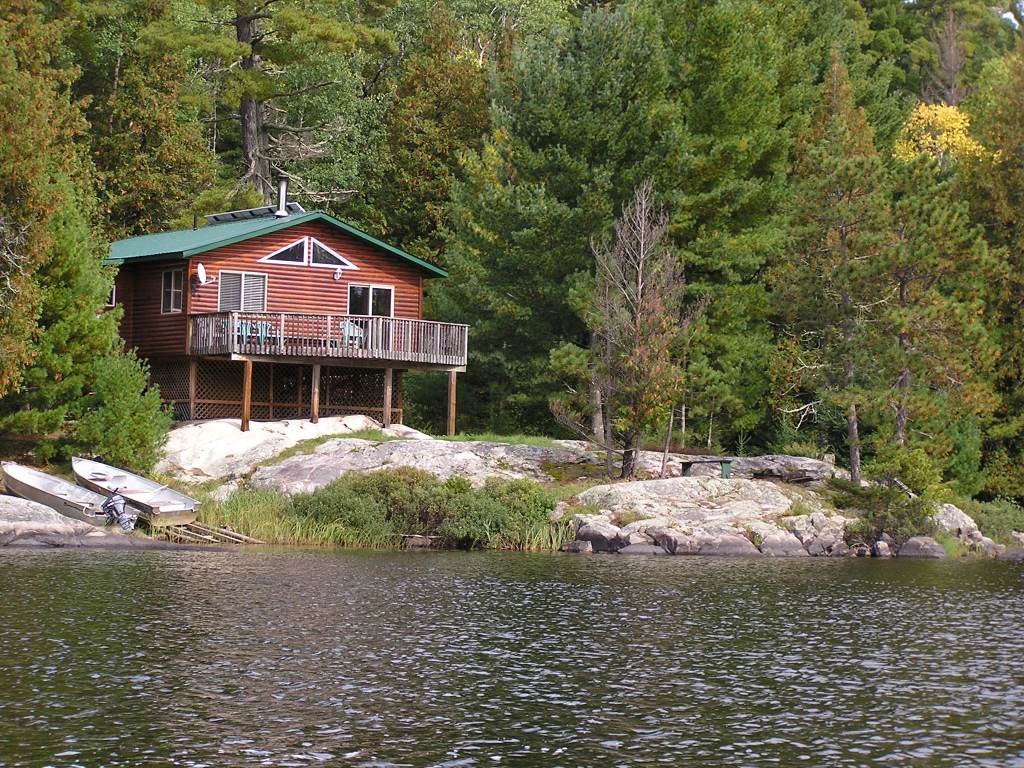
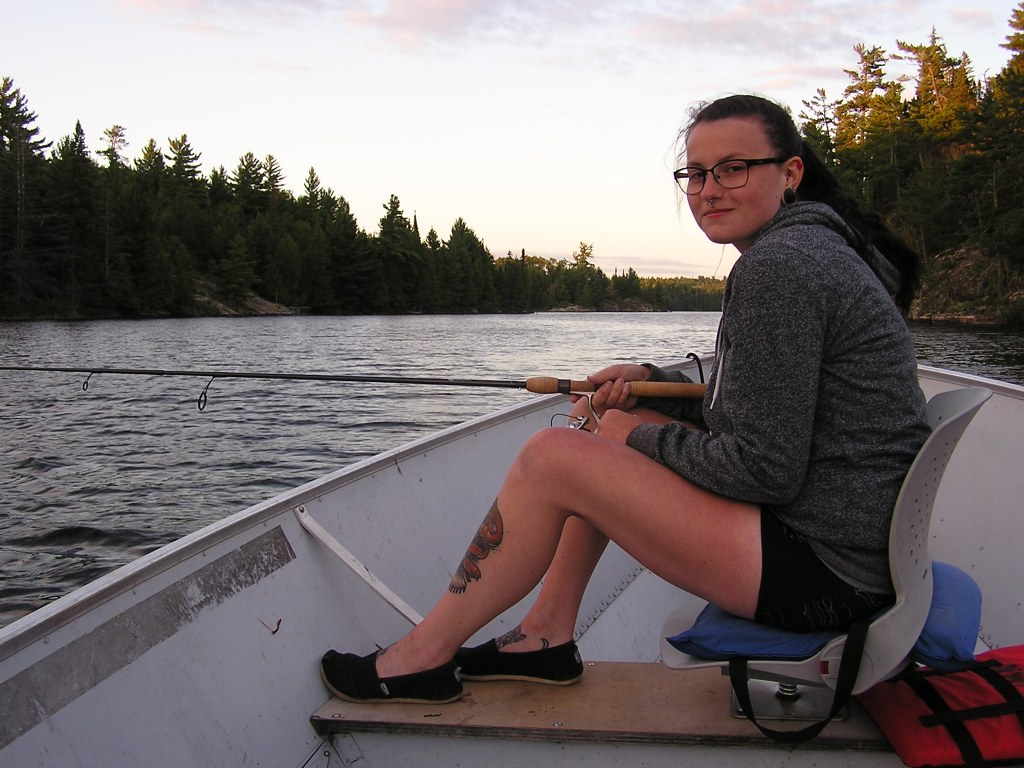
She was sixteen. No cell phone. Her dad on one side of the cabin, her on the other. The lights were cut. A thunderstorm was rolling across Kishkutena Lake, and the lightning was lighting up the water like nothing she’d ever seen.
They didn’t talk about anything important. They just talked. For hours. While the storm passed.
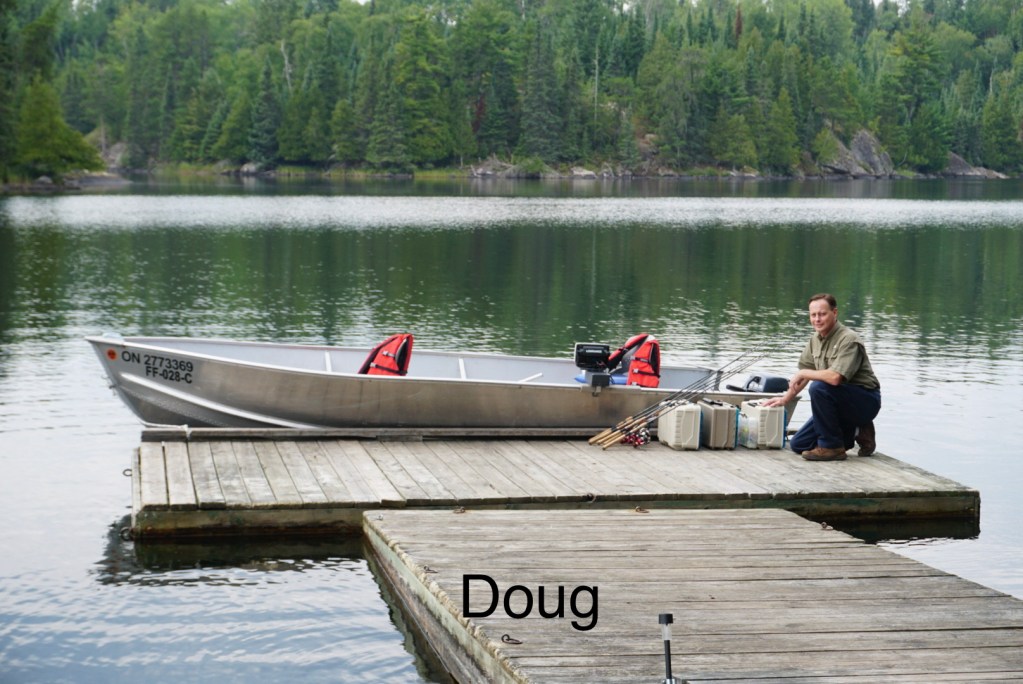
Doug Coleman has been flying into Kishkutena Lake with Northwest Flying since 1988. He took his daughter with him for three of those summers — fifteen, sixteen, seventeen — and the thunderstorm night is one of seven adventure stories he told us this spring on a phone call that was supposed to last fifteen minutes and didn’t end for over an hour.
We’ve kept the stories in the order he told them. The last one is the one to read slowly.
This was supposed to be an interview. Fifteen minutes, maybe twenty. We’d record it, transcribe it, pull a few quotes, and put together a customer feature for the website. That was the plan.
What actually happened was a long, slow conversation with a man from Tennessee who has been flying with Northwest Flying since 1988 — a man who is genuinely emotional about a lake in Northwestern Ontario, and who, once he started telling stories, kept finding more of them. Funny ones. Scary ones. Tender ones. Quiet ones about the night sky.
Here’s how he told it.
How It Started
Before he gets into Kishkutena Lake itself, Doug almost always starts with the people.
The way he tells it, it was 1984. He was new at Purity Dairies. There was an older route driver there named Bob Furer — F-U-H-R-E-R, he’ll spell it for you — with four sons who also worked at the dairy. The Furers had been going to Canada for years to fish smallmouth bass and musky. One day they invited Doug along.
“It was probably 1988 or ’89 was the first year that I decided to go with these gentlemen. It was four of us, and we made the trip.”
The Furers had a friend — an American — who owned a private cabin on Kishkutena Lake. The Roberg cabin, built on a small island. That was the deal: you stayed at Roberg, and you flew in with Northwest Flying. Always Northwest Flying.
“We were able to make that trip up there for literally like $300 a piece — for the whole trip up there and back.”
Doug grew up around lakes. He was raised 150 yards from one. So the first time he saw Kishkutena Lake from the floatplane window — clear water, rocky cliffs, pine trees standing in for any horizon he’d ever known — he understood it instantly. He just hadn’t seen anything like it at that scale.
He went back the next year. And the next. The four men kept making the trip, and somewhere in there, the trip became part of his life.
“It’s a gift for friends.”
The Phone Call
The Roberg cabin years ran from 1988 or ’89 through about 2002. Doug spent thirteen or fourteen seasons there before things changed — the cabin’s original owner passed away, and through the process of the property being reclaimed, the cabin came down. The island was returned to a natural state. Northwest Flying was involved in the work.
By then, the four-man group was breaking up too. The other guys had families, and their families wanted vacations of their own. Doug had divorced in 2000. He had his daughter to think about. And he wasn’t ready to give up Kishkutena Lake.
So he picked up the phone.
“I knew Shane. I knew his father pretty well, and I would see his mother there at the flying service. I gave Shane a call one day. I said, ‘Shane, I’m Douglas. I’m flying with you guys quite a bit, sometimes twice a year. I’d like to rent one of your cabins. Would it be possible? It’s just me. I’m by myself.’ And he said, ‘Yes, Doug. We could definitely accommodate you on Kishkutena.'”
That was 2002 or 2003. Shane Pope said yes to a single fisherman who wanted ten days alone on a lake most outfitters book to groups of four, six, or eight. Doug has been going back almost every year since.
“Shane has always always worked with me.”
The drive from Tennessee to Nestor Falls, Ontario takes him two days. He drives to the far edge of Wisconsin and sleeps. He drives to International Falls and sleeps. The next morning he crosses the border, drives straight to the Northwest Flying base, meets Shane, and gets on the plane. Sometimes the Beaver. Sometimes the Otter. On the days when the cargo runs are heavy, the Beechcraft.
“That is amazing — to fly in that huge beautiful aircraft.”
He stays ten days. Every time.
“I just fell in love with Kish so much that I made the trip alone.”
Three Summers With His Daughter
The story Doug tells with the most feeling, though, isn’t about going alone.
For three years, his daughter went with him. She was fifteen, sixteen, and seventeen.
He paused on the call when he started telling that part — you could hear it in his voice. He’s a man who gets emotional about Kishkutena Lake easily, and even more so about the people he’s shared it with.
“And here, a teenager without a cell phone willing to go with her dad. And that was amazing.”
She could fish. He’d grown up by a lake himself and had taught her young — she knew her way around a spinning reel and a baitcaster. They fished together, they ate in the cabin together, and on one particular night, neither of them ever forgot what they saw.
“One night in the cabin, a thunderstorm was coming by. It was thundering and lightning, and we cut the lights out in the cabin and watched the lightning light up the lake. We were just standing there talking and we talked for hours while that storm passed.”
They cut the lights. They stood at the window. They talked. The lake lit up. That was the night.
And the rest of the nights they did everything together too. Doug is an amateur stargazer — he keeps a telescope at home in Tennessee. The trouble with Tennessee, he says, is that you can really only see the planets. Up at Kishkutena Lake, the sky has so many stars he loses track of where the planets are.
“As it gets dark on Kish, you can see satellites pass over one after another. If you know what you’re looking for, you just look up at the sky and it looks like a star and it’ll go from one horizon to the other within thirty seconds. When it finally gets dark, the stars come out — you see the Milky Way galaxy in its full beauty. When you look at the lake surface, you can see the stars on the surface of the lake.”
He and his daughter saw the Aurora Borealis together three times.
“We’ve been blessed.”
“When you look at the lake surface, you can see the stars on the surface of the lake.”
The Boat That Almost Got Away
Doug laughs at himself easily. He told us a story he calls one of his funny ones — though it took a long time before he could call it that.
There’s an abandoned cabin on Kishkutena Lake that he calls the Green Cabin. The roof is gone. The walls are still up. A few fixtures still hang inside on what’s left of the rooms. He pulls his boat in there now and then to walk through it — partly out of curiosity, partly because places like that don’t exist anywhere else in his life.
One afternoon, with his daughter, he tied the boat up at the shore and they went inside.
“When we came back, the wind had blown our boat off the shore. My knot had come untied. So I had no choice but to go swimming — I had to swim probably 25 or 30 yards. The boat had just left the shore.”
He caught it. The boat hadn’t drifted far. They went back to the cabin that evening and laughed about it. But Doug isn’t really laughing when he tells the story.
“It is scary, Doug. I have traced that across my mind a hundred times. How would we have gotten back to the cabin? Especially with my daughter — I’d have really felt bad, being that careless.”
He’s careful about what could have happened. He talks about the wildlife on Kishkutena Lake being different from Tennessee’s. He’s never seen a bear there, but he’s always aware. He talks about the forest floor — pine needles a foot thick, fallen for hundreds of years, soft as carpet — and how easy it would be to twist or break an ankle walking through it. There are boulders. There are rock walls you’d have to navigate around.
“You’re walking like on a carpet.”
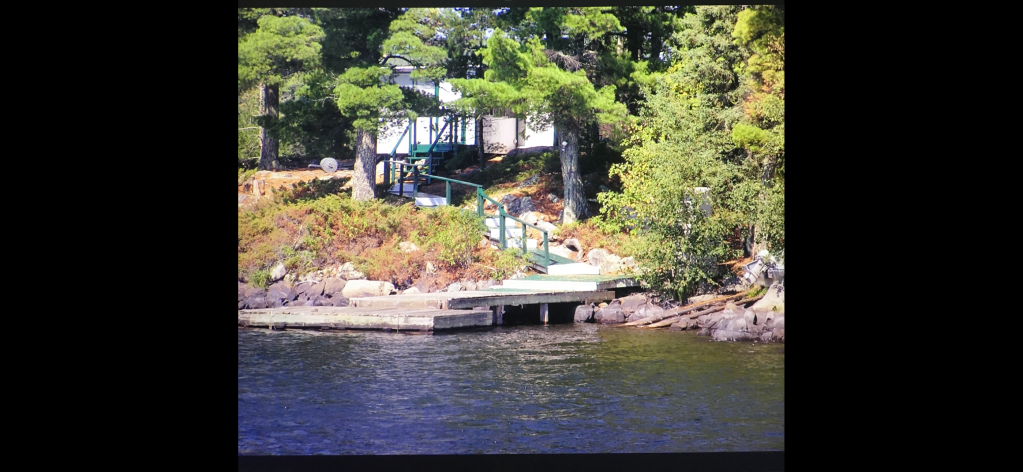
The wind on Kishkutena Lake comes up most afternoons. Doug ties his knots tighter now. And when he and his daughter went out on the lake after that, they were always wearing life jackets. They always do. He’s particular about that.
“I’ve traced that across my mind a hundred times.”
The Flare Across the Lake
The thing about a long conversation is that one story leads to another. Doug had been talking about the people he’s met on Kishkutena Lake — how he stops every passing boat to introduce himself, where they’re from, whether they need anything. “Pleasure to meet you. If you need anything, we’re over here.”
That habit of his has a story behind it.
It was 1999. Doug was thirty. Bob Furer was sixty-one or sixty-two. They were out on the lake fishing when they saw something they hadn’t expected — a hand flare being waved across the water, three-quarters of a mile away. As far as they knew, no one else was on the lake.
Doug’s mind went straight to the worst.
“I said, ‘Oh my gosh, someone’s lost a finger. Someone’s got a hook in their face.’ On the way I’m praying — I hope this isn’t anything we can’t handle, something we can deal with.”
They reeled in. They ran the boat hard across the lake. By the time they got there, they’d worked themselves up for a real emergency.
“Thank goodness — they were having boat trouble. Mr. Furer was a heavy-duty mechanic, especially on small engines. He looked at their boat. They had taken their gas line and crimped it. He saw it from inside their boat. He says, ‘Uncrimp your gas line and it’ll start.’ It started up, and they came back to our cabin.”
The two boats motored back together to the Roberg cabin. Doug brewed coffee. The stranded couple — a husband and wife from Wisconsin — sat with him and Bob for an hour. They talked about where they were from, where they were staying, how they got there. Before they left, they handed Doug a couple of flares as thanks.
“I still have those flares. I don’t take them with me, but I still have them.”
That afternoon is part of why he stops every boat now. The lake takes care of its own. You stop. You help. You drink coffee with strangers and find out where they’re from.
“I still have those flares.”
The Fish That Came Back
Some stories outlive everyone in them. Doug told us this one without setting it up — he’d been talking about how the fishing on Kishkutena Lake compares to other lakes, and the story just walked itself in.
It was the mid-1990s. The four of them were up there. Doug was in the boat with one of his buddies, fishing for smallmouth bass on a spinner bait — the buddy’s favorite, blue and yellow.
“He landed a big fish — was reeling him in. His fishing line broke. He lost his favorite spinner bait.”
They sat in the boat to retie the rig. The fish was gone. The lure was gone. Three minutes passed.
“That fish almost jumped into our boat. We could see the spinner bait — it was a blue and yellow spinner bait. The line had broken on the fish probably 10 or 12 yards from the boat. The fish jumped up and hit the side of our boat. We could hear the blades of the spinner bait jingle on the boat. We both saw the color of the skirt — blue and yellow. We both laughed.”
He still tells it the same way every time, and there’s only one way to end it.
“We always made a joke. We said, ‘You know — that fish, that’s what you get.'”
The fishing on Kishkutena Lake has a personality. Doug has been catching smallmouth bass there for thirty-seven years, and he says they fight harder than anything he’s ever pulled in elsewhere. The biggest one he ever caught was five and three-quarter pounds. He released it. He releases all his fish now.
But the smallmouth aren’t the only personalities on Kishkutena Lake. The musky is.
“When you’re catching bass, whether you’re reeling in a bass that weighs a half a pound or three pounds, a musky — they will grab your fish. They will not let go of that bass. They are not hooked. They just, in their mind, they have dinner in their mouth.”
Doug has been pulled around coves on light bass tackle by musky who refused to let go of the smallmouth he was trying to land. Hundreds of yards. Sometimes they’ll fight for fifteen or twenty minutes before he can even see them.
“They’re the boss. They’re the king.”
“That fish — that’s what you get.”
We Weren’t Rigged For a Musky This Big
The smallmouth on Kishkutena Lake have a personality. Doug learned that quickly. The musky have a worse one.
“When you’re catching bass, whether you’re reeling in a bass that weighs a half a pound or three pounds — a musky, they will grab your fish. They will not let go of that bass. They are not hooked. They just, in their mind, they have dinner in their mouth.”
Doug and his friends weren’t musky fishermen. They came up for smallmouth. They brought two-piece bass rods. They weren’t rigged for what was about to happen.
“And you know how big musky get and how they fight. Sometimes he’ll fight them for fifteen or twenty minutes. They pull our boat. They have pulled our boat around a cove. I mean hundreds of yards. Once you’re hooked on to the musky, you’re at his mercy. They pull us around and around. And you try to reel them in — and when you get them twenty or thirty feet from the boat, they just strip line off your reel. They’re going to do what they’re going to do.”
“They’re the boss. They’re the king.”
If you’re lucky, the musky holds onto the bass long enough for you to get the whole rig — bass, musky, and all — up against the side of the boat. Doug clips the musky, frees his lure from the bass, and turns the musky loose, sometimes with the bass still in its mouth. Sometimes the musky lets go. Sometimes it doesn’t.
In all his years on Kishkutena Lake, he has caught at least one musky every single trip. Some trips, three or four.
The one he remembers most was with his daughter.
“I was with my daughter one time and a musky grabbed my bass. I handed my fishing rod to my daughter so she could enjoy that bite. Typically you don’t feel that type of a fight from even a three or four pound bass. So I got to watch her enjoy that. I’ve got some pictures of her fighting that musky. That musky was probably nine or ten pounds. To me that’s pretty big.”
He doesn’t tell that story like it’s about the fish.
“They’re the boss. They’re the king.”
Midnight in the Bottom of the Boat
By the end of the call, Doug had moved into the kind of stories you tell when no one is in a rush to hang up.
He talked about how he’s changed. He doesn’t fish sixteen hours a day anymore. He used to. The first ten years on Kishkutena Lake were tournament-style — counting fish, comparing numbers, trying to land the biggest one. Then somewhere along the way, the counting stopped.
“I saw that it was more. This is more. It’s not a contest. It is something that the Lord has created and we enjoyed it together.”
Now he fishes slower. He watches.
“I watched the squirrels and chipmunks. I usually catch a snake — I call it a garter snake. I have a pet snake. I love snakes. And I always release them. It’s the wildlife. If you look and listen, it’s amazing — to hear the wind blow through the trees and the trees whisper and they dance in the wind.”
“I’ve grown from going up there fishing tournament style. I go up there and I still enjoy fishing, but I fish less and a little bit slower. I just enjoy what God has created — what I see on the lake. If you just look and listen, you can smell flowers, you can smell the pine tree.”
He doesn’t drink. Coke or iced tea is his preference. He cooks steaks and vegetables on the grill. He doesn’t keep many fish — only ate them a few times in all his trips combined. He’d rather watch them swim away.
And almost every night, on at least one trip per visit, he does this:
“I take the boat out at night. It doesn’t really get dark till about 10:30 p.m. I’ll take it out around midnight and anchor it down in the middle of the lake. When I’m at the cabin, the tree line blocks part of the sky. So I’ll go about 100 yards from the cabin, anchor the boat down, and lay in the bottom of the boat. I can view the whole night sky.”
He always wears a life jacket. He always uses the kill switch on the motor. Then he just lies there.
“Some people just look up and see life in the sky. I look at it in a different way. The stars we’re looking at — what we’re looking at is history. Some stars are millions of light years away.”
Doug got quiet for a minute then. He apologized for talking too long. He said he knew most people just want to fish and get back to whatever they do at home, and that’s fine. But for him, it was never really just about the fish.
“It’s a wonderful place. As long as I’ve been going up there, I still get emotional thinking about it. It’s been a blessing.”
When you ask him what it’s like in the morning, after a night like that, he answers without thinking about it:
“I dread leaving — because in the morning, the lake is just calm and beautiful. The grass in the lake just dances back and forth, and the reflections on the lake. The flowers that bloom, the petals that float on the water.”
“What we’re looking at is history.”
The End of the Call
We talked for over an hour. Doug had two laptops at home with thirty-seven years of pictures on them, and he’d promised at the start of the call to dig them out and send them in batches of five or ten. Stone fireplaces standing alone where cabins used to be. The Green Cabin. His daughter at fifteen. The Wisconsin couple from the flare story. Northern lights.
He apologized again at the end for talking too long. We told him there was no such thing.
The hardest thing to write about a conversation like that one is what’s missing. He told us more stories than we could fit. The Mr. Meyers cabin on the big island near Roberg. The Boy Scout canoe groups crossing the lake in the late ’90s, their canoes tied together, drifting across the water. The Beechcraft hauling cargo. The way Northwest Flying pilots tip their wing when they fly over the cabin on Kishkutena Lake on their way to other lakes. He sees those wings tip and he knows.
Doug is taking 2026 off from Kishkutena Lake. He had a hip replacement last October and he’s still working through the recovery. He’s worried about the slippery rocks at the boat dock in the morning, about getting equipment from the boat to the cabin, about being out there alone before the hip is fully back. We told him to take the year, heal up, and call us when he’s ready. The cabin will be there.
He’s also planning his retirement now. He’ll be sixty-two or sixty-five when he finally hangs it up at the dairy. After that, he wants to come up to Kishkutena Lake more than once a year. He’s even thinking about coming in winter, just to see what minus thirty looks like.
He’ll get there.
A Note from Northwest Flying
Doug Coleman is one of hundreds of guests who have made Northwest Flying what it is. We are a small family operation in Nestor Falls, Ontario. We fly people into a small group of remote lakes — Kishkutena Lake, Loonhaunt Lake, Gordon Lake, Cleftrock Lake, Ajax Lake — and we have flown some of the same families for two and three generations.
Stories like Doug’s are why we do what we do.
They’re the part of the job that has nothing to do with airplanes or cabins or fish counts. They’re about people who built a piece of their life around a lake in Ontario and the family business that keeps flying them in.
If you’ve been flying with us for ten, twenty, thirty years and your story isn’t on this site yet, we want to hear it. Give us a call. We’ll spend an hour with you the same way we spent an hour with Doug.
This is an ongoing series of feature stories from our guests like Doug Coleman and Bob Frederick. There will be more.
Doug Coleman, thank you. Heal up. We’ll see you on the dock.
— Northwest Flying Nestor Falls, Ontario
About Kishkutena Lake
Kishkutena Lake is one of the five fly-in outpost lakes serviced by Northwest Flying. It holds smallmouth bass, musky, walleye, and lake trout. The cabin sleeps six. Access is by floatplane only from the Northwest Flying base in Nestor Falls, Ontario.